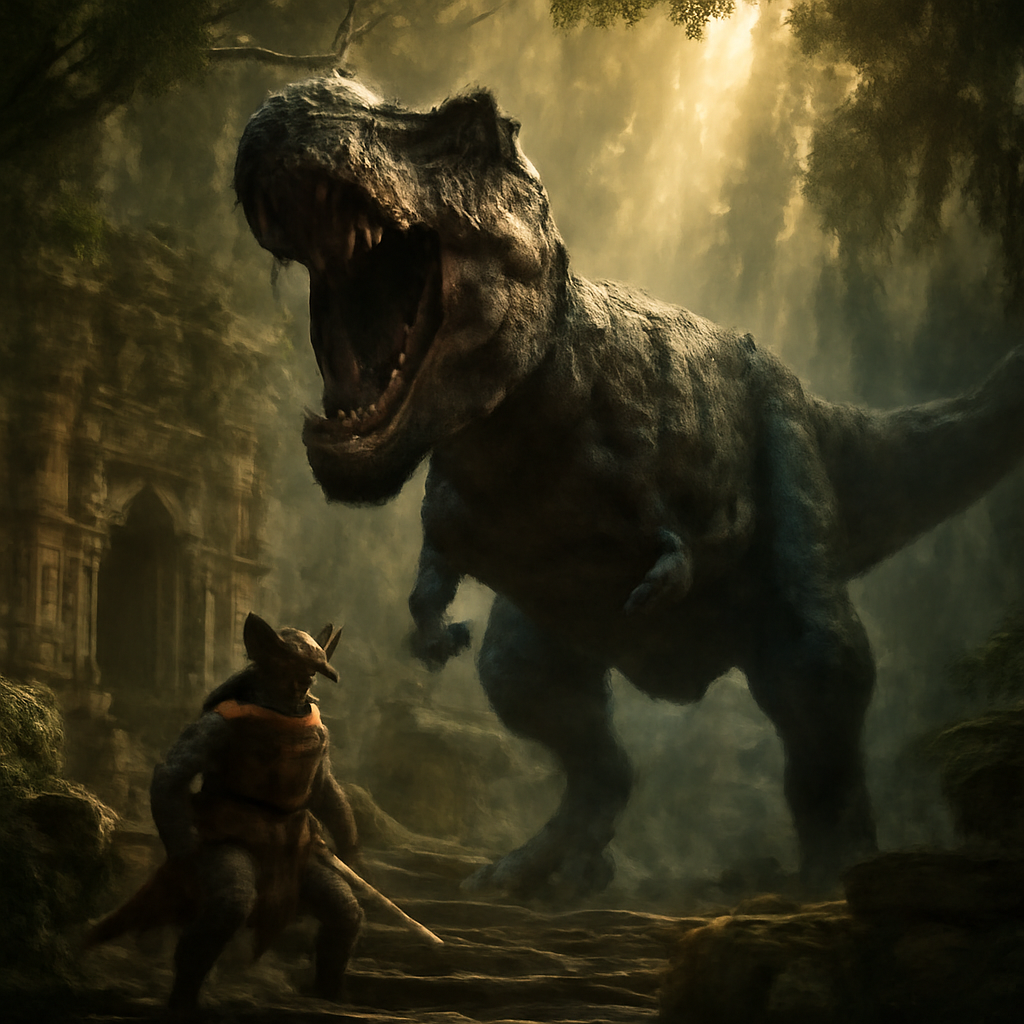
Why Dinosaurs in D&D 5e Hit Different
I'll never forget the night I threw a pack of velociraptors at my solo character in a jungle hex crawl. It was 2 AM, I had a cold cup of coffee, and my border collie was snoring at my feet. I figured dinosaurs would be straightforward Monster Manual fodder—roll initiative, swing sword, done. Instead, those clever girls (yeah, I stole from Jurassic Park) turned into a three-hour tactical nightmare that nearly killed my ranger. Dinosaurs in D&D 5e aren't just big lizards. They're intelligent hunters, environmental hazards, and narrative gold when you use them right.
The game gives us dinosaurs across multiple sourcebooks, from the humble hadrosaurus to the terrifying tyrannosaurus rex. But most DMs treat them like random encounters or druid wildshape options and call it a day. That's leaving meat on the bone—or in this case, leaving the whole skeleton buried.
The Dinosaurs You Actually Need to Know
Fifth edition offers more dinosaur variety than you might expect, but some shine brighter than others for different campaign styles.
The Big Three for Combat
- Tyrannosaurus Rex (CR 8): The undisputed heavyweight. 136 hit points, multiattack with a bite that deals 4d12+7 damage. This isn't a fight—it's a disaster your party has to survive. Use it sparingly, when you want your players genuinely afraid.
- Allosaurus (CR 2): The goldilocks option. Strong enough to threaten mid-level parties, common enough to be believable in dinosaur territory. Pack tactics make them terrifying in groups.
- Deinonychus (CR 1): Velociraptors by another name. Fast, pack hunters with pounce abilities. Three of these can shred a 3rd-level party if they get the drop.
The Utility Players
- Pteranodon (CR 1/4): Flying scouts that can grab Small creatures. Excellent for harassment tactics or environmental challenges.
- Ankylosaurus (CR 3): A living tank. Great for blockades or as a mount for larger creatures.
- Triceratops (CR 5): Herbivore with an attitude. Perfect for "the players misjudged this situation" moments.
The Monster Manual and Volo's Guide to Monsters cover most of your needs, but don't sleep on the brontosaurus (CR 5) from Volo's if you want genuine awe instead of terror.
Building Encounters That Feel Prehistoric
Here's what I learned after that velocirapt—sorry, deinonychus—ambush nearly ended my ranger's career: dinosaurs in D&D 5e work best when you lean into their animal intelligence and environmental advantages.
Ambush Predators Are Your Friends
Dinosaurs aren't dungeon monsters waiting in rooms. They hunt. A pack of deinonychus should stalk the party through jungle undergrowth, maybe for hours of game time. Players hear rustling. They catch glimpses of movement. The ranger's animal handling check reveals these things are coordinating. Then the attack comes from three directions at once.
Give your dinosaurs the terrain advantage. Dense jungle limits sight lines. Rocky outcroppings provide high ground for pouncing. Riverbeds become choke points where an allosaurus drives prey toward its mate.
Not Everything Wants to Eat You
The best dinosaur encounter I ever ran didn't involve combat at all. The party stumbled into a triceratops nesting ground. Mama was not pleased. The challenge became: get through this hex without provoking a CR 5 creature who will absolutely charge if you get too close to those eggs. Suddenly my players were whispering strategies, using Pass Without Trace, making Nature checks to understand behavior patterns.
Herbivores defending territory, carnivores who've already eaten and just want to sun themselves on a rock, sick or injured dinosaurs that are more pitiable than threatening—these create texture.
Dinosaur Companions and Mounts
If you're running a campaign set in Chult (from Tomb of Annihilation) or any lost-world setting, players will ask about dinosaur companions. Here's how to handle it without breaking your game.
The Druid Solution
Moon druids can Wild Shape into dinosaurs starting at certain levels—CR 1 options at 2nd level (deinonychus time), CR 2 at 6th level (allosaurus), and up to CR 6 at 18th level. This is built into the class. Let it shine. A druid turning into a T-Rex at high levels is a reward for sticking with the class, not a problem to fix.
Ranger Companions
The Beast Master ranger can technically bond with dinosaurs, but the original Player's Handbook version struggles to keep animal companions relevant. If you're using Tasha's Cauldron of Everything rules, the problem's mostly solved—the companion scales better. For legacy Beast Master, consider homebrewing that dinosaur companions count as one size category smaller for CR calculation purposes. A Medium deinonychus companion stays viable longer.
Mounts and Pets
Pteranodons make excellent (if fragile) mounts for Small characters. An ankylosaurus can serve as a living siege weapon or caravan guardian. The key is cost and loyalty. A trained dinosaur mount should cost serious gold (500-2000 gp depending on type) and require regular Animal Handling checks during stressful situations.
Just last month, I uploaded a photo of my aunt's very grumpy iguana into Creature Forge AI's character generator, and it created this perfect Lizardfolk ranger with the exact same judgmental expression. Sometimes your real-life animals inspire better characters than pure imagination—and if you've got a bearded dragon or a parrot that screams at 6 AM, well, they might just be your next D&D companion.
Setting-Specific Dinosaur Use
Chult and the Tomb of Annihilation
This is dinosaur central in official D&D lore. Chult is Jurassic Park with liches. The jungle hexcrawl practically demands daily dinosaur encounters. Use them to establish the danger level early—a T-Rex appearance in week one tells players this place doesn't care about their character backstories.
The dinosaur racing scene in Port Nyanzaru is pure flavor gold. Let players bet on races, sponsor their own dinosaur (an ankylosaurus named "Tank" is a crowd favorite), or even cheat using magic.
Ixalan and Other Lost Worlds
Magic: The Gathering's Ixalan setting, which has been adapted for D&D play, goes all-in on dinosaurs as sacred creatures and mounts for the Sun Empire. Here, dinosaurs aren't just monsters—they're culture. Conquistador-style factions ride triceratops into battle wearing ceremonial armor.
If you're homebrewing a lost world, consider what role dinosaurs play beyond "dangerous wildlife." Are they worshipped? Domesticated? The result of magical experimentation? The bones of dead god-beasts that somehow still walk?
Time Travel and Planar Shenanigans
Who says dinosaurs belong in jungles? A time stop spell gone wrong could drop a confused allosaurus into a city marketplace. A druid circle might maintain a demiplane preserve of extinct species. A mad wizard's tower could house cloned dinosaurs in an ever-repeating ecosystem.
I once ran a one-shot where the party had to chase a thief through a museum, and every time they broke a fossil display, that dinosaur magically reconstituted for 1d4 rounds. Pteranodon skeleton crashes down? You've got one minute before it starts flying around pecking people.
Homebrewing Your Own Dinosaurs
The Monster Manual doesn't cover every species, and sometimes you want something specific. Here's the fast way to homebrew without breaking CR calculations.
The Template Method
Start with an existing stat block close to what you want. Swap damage types, adjust movement speeds, maybe add a special ability. Want a spinosaurus? Take the T-Rex, drop the HP by 20, give it a swim speed of 40 feet and advantage on attacks against creatures in water. Done.
Want a microraptor swarm? Use the swarm of ravens stat block, bump the damage type to piercing, add pack tactics. You just made a terrifying jungle hazard.
Don't Forget the Environment
The dinosaur itself is half the encounter. What about tar pits (difficult terrain, potential restraining hazard)? Volcanic vents (fire damage zones)? Nesting grounds with eggs that could be valuable orquest-relevant?
A standard ankylosaurus is CR 3. That same ankylosaurus protecting eggs in a sulfur vent cave with limited visibility and fire geysers? That's a CR 5 encounter easy, without changing a single stat.
Common Mistakes DMs Make with Dinosaurs
Mistake #1: Treating Them Like Dragons. Dinosaurs are animals, not magical creatures. They follow food, territory, and mating instincts. They don't hoard treasure or make cunning plans. A T-Rex is terrifying but ultimately predictable if your players think like hunters instead of adventurers.
Mistake #2: Random Encounter Syndrome. "You're walking through the jungle, roll initiative, it's three allosaurus." That's boring. Build tension. Tracks first, then distant roars, then circling behavior, then combat. Make the dinosaur feel like it exists whether the party is there or not.
Mistake #3: Ignoring Scale. A brontosaurus is Gargantuan. That's 20+ feet tall, multiple tons. When it walks, the ground shakes. Trees snap. It can't fit through dungeon corridors. Use size as a narrative and tactical element.
Resources and Tools
If you're building a dinosaur-heavy campaign, you need more than stat blocks. You need personalities, encounter tables, and maybe some visual references that aren't just generic "big lizard."
I've gotten a lot of mileage out of Creature Forge AI's monster generator for creating unique dinosaur variants—you can specify environmental adaptations, coloration patterns, even saddle configurations if you're going the mount route. The tool's particularly good at generating stat blocks for homebrew species that actually balance properly at your target CR.
For pure inspiration, the Tomb of Annihilation sourcebook has random encounter tables specifically built around Chult's ecosystem. The Explorer's Guide to Wildemount also has some interesting takes on prehistoric creatures in the Xhorhas wasteland.
Making Dinosaurs Memorable
The honest truth? Dinosaurs in D&D 5e are only as interesting as you make them. A T-Rex on paper is big numbers. A T-Rex that's been tracking your party for two days, that took down the NPC guide in one ambush bite, that the ranger recognizes by the broken tooth in its jaw—that's a character. That's the dinosaur your players name and talk about years later.
Back on the farm, we had this rooster everyone called Napoleon. Four pounds of pure hate and territorial aggression. He'd chase grown adults across the yard. Every dinosaur in your campaign should have that same energy—not just stats, but presence. Personality. The triceratops who snorts and paws the ground before charging. The pteranodon that keeps dive-bombing the shiny paladin because it thinks her armor is a rival's mating display.
Those details turn a random jungle encounter into the story your bard writes a song about.
Ready to Go Prehistoric?
Dinosaurs in D&D 5e offer something special: they're familiar enough that everyone knows what to expect, but weird enough in a fantasy context to feel fresh and dangerous. Whether you're running a full lost-world campaign or just want to shake up your standard forest encounters, these ancient predators deliver.
And if you're looking to populate your Jurassic campaign with more than just vanilla stat blocks, Creature Forge AI can help you generate custom dinosaurs, prehistoric NPCs, and even turn that photo of your bearded dragon into a surprisingly intimidating Dragonborn fighter. Because sometimes the best inspiration has scales and lives in a terrarium.
Now if you'll excuse me, I've got a solo session waiting—my ranger has unfinished business with those deinonychus, and I've spent the last week plotting their revenge.