I never expected my border collie to become the MVP of a solo campaign, but here we are.
Her name is Scout—black and white, constantly herding invisible sheep in the backyard, smarter than most people I know. One night, after a particularly frustrating encounter where my ranger character felt flat and generic, I had a thought: what if Scout was the ranger?
That's when I discovered the real magic of creature forge tools—not just generating random stat blocks, but building characters that actually mean something. Characters with faces you recognize. Personalities you've lived with.
What Makes Creature Forge Different
Let's be honest: there are dozens of D&D character generators out there. Most spit out random names, random stats, random everything. They're fine for quick NPCs you'll forget in ten minutes.
But Creature Forge does something I haven't seen anywhere else—it lets you upload a photo.
A photo of your actual pet. Your friend. Your grumpy uncle who would make a perfect dwarf cleric. The AI looks at the image and builds a fantasy character that genuinely looks like them. Not a cartoon version. Not a vague approximation. A character you'd recognize immediately.
When I uploaded Scout's photo to the character generator, I got a border collie ranger with intelligent eyes, leather armor that didn't look ridiculous, and a stat block that reflected her actual personality—high Wisdom, absurd Perception, Dexterity through the roof.
She even had the white blaze down her nose.
Why This Matters for Solo Players
I play D&D alone. Late nights after farm chores, coffee going cold, dice scattered across the kitchen table. No party to bounce off, no DM to surprise me. Just me, a notebook, and whatever story I can cobble together.
The hardest part? Making NPCs and companions feel real.
When you're running everything yourself—both sides of every conversation, every combat encounter, every betrayal and triumph—it's easy for characters to blur together. Generic Elf Wizard #4 starts sounding exactly like Generic Human Fighter #2.
But when the ranger helping you track goblins through the woods looks exactly like your dog? When you can glance at the character sheet and see Scout's actual face staring back?
Suddenly it's not Generic Ranger. It's Scout. And you care whether she makes that Dexterity save.
Farm Life Meets Fantasy
Once I'd done Scout, I couldn't stop.
My goat Biscuit became a chaotic neutral druid with a taste for mayhem and an inexplicable ability to escape any enclosure—just like real life. I gave him wild shape and proficiency in Sleight of Hand because that goat has stolen more tools from my workbench than I can count.
The barn cats—all five of them—became a rogue's guild. Each with their own specialties: lockpicking, stealth, intimidation (that's Marmalade, the orange tabby who hisses at everyone).
Even our old draft horse, Copper, got a second life as a retired paladin NPC. The generator captured his gentle eyes and graying muzzle perfectly. I wrote him as the wise mentor figure who shows up when my main character is in over their head.
These weren't just stat blocks anymore. They were characters with history.
How Creature Forge Actually Works
The interface is straightforward—no PhD in AI required.
You've got three main tools depending on what you need:
- Monster Generator: For creating creatures, beasts, and enemies. Full stat blocks, abilities, lore. You can specify challenge rating, creature type, even personality traits.
- Character Generator: Where the photo upload magic happens. Build PCs or important NPCs with complete character sheets, backgrounds, and portraits that actually match your uploaded image.
- NPC Generator: Quick creation for shopkeepers, guards, quest-givers—the supporting cast that makes your world feel lived-in.
For the photo feature, you just upload a clear image, add some guidance about what kind of character you want (class, personality, role in the story), and let it work.
In my experience, the better the photo, the better the result. Good lighting helps. A clear view of the face—or snout, in Scout's case—makes a difference. But I've gotten solid results from phone pictures taken in the barn, so you don't need professional equipment.
Beyond Pets: Real People as Characters
Here's where it gets really fun for group play.
My cousin tried Creature Forge for her in-person campaign. She uploaded photos of each player and generated NPC versions of them—evil alternate universe counterparts. Her players fought themselves.
She said the reactions were incredible. That moment when someone realizes they're staring at their own face on an enemy stat block? That's engagement you can't fake.
Another friend used it for a surprise anniversary gift—he'd been running a campaign for his wife for two years, and he secretly generated a legendary hero version of her as the final quest-giver. Custom portrait, full backstory, magic items themed around her real-life interests.
She cried. Good tears.
The Practical Side: Building Better Campaigns
Let's talk mechanics for a second.
Creature forge tools save hours of prep work. Before, I'd spend entire evenings statting out NPCs by hand, trying to make them mechanically interesting and narratively relevant. Now that process takes minutes.
But more importantly, it solves the creativity block problem.
You know that moment when you need a random encounter and your brain goes blank? When the party talks to a shopkeeper you didn't plan for and you have to improvise everything?
Having a library of pre-generated NPCs—especially ones with actual faces and personalities you've defined—means you're never scrambling. You can pull up a character, glance at their portrait and backstory, and immediately know how they'd react.
Tips I've Learned
After generating probably fifty characters at this point, here's what works:
- Be specific with personality prompts. Don't just say "friendly." Say "friendly but terrible at keeping secrets" or "friendly in a used-car-salesman way."
- Upload photos with good contrast. The AI needs to see details clearly. A well-lit photo beats an artistic one.
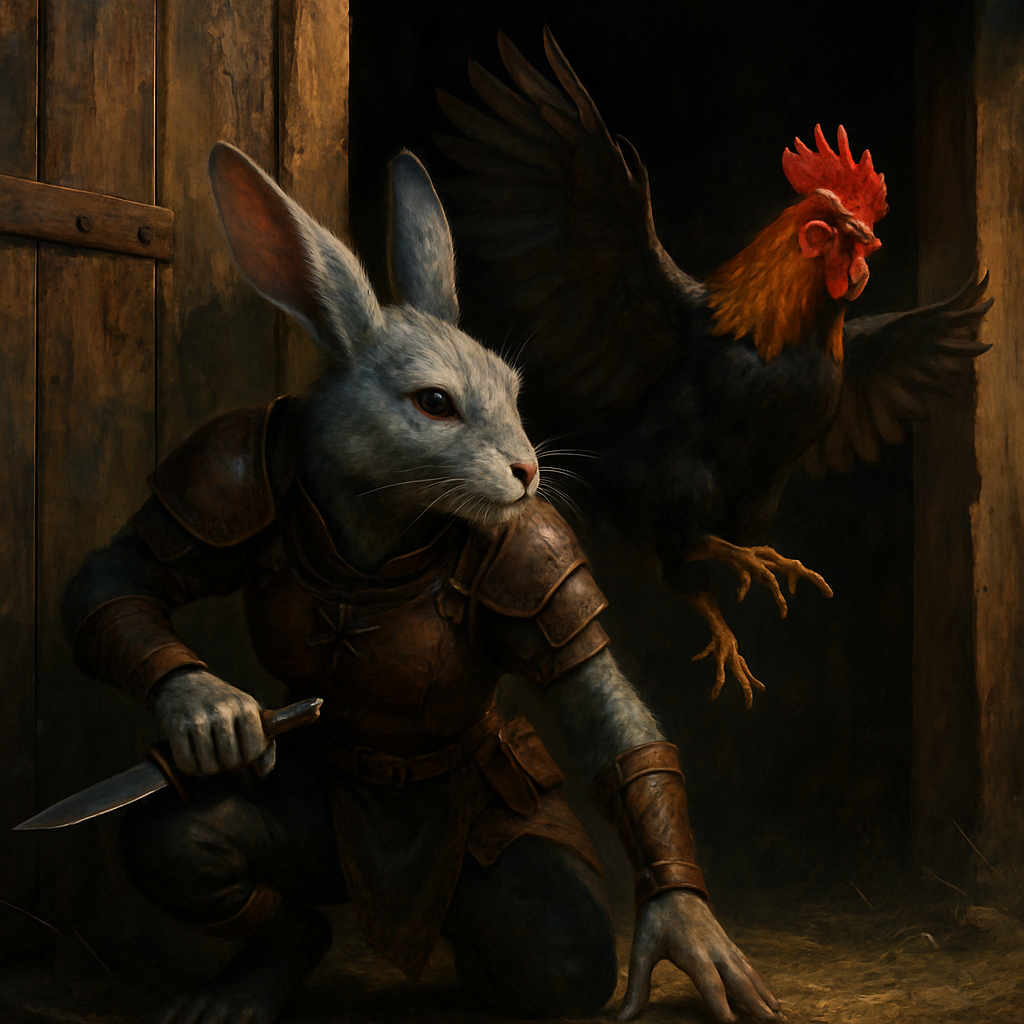
- Don't overthink class choice. Sometimes the "wrong" class for a pet creates the best character. My chicken as a barbarian is objectively hilarious and somehow works perfectly.
- Save everything. Even characters you don't use immediately. That weird goblin merchant you generated on a whim might be perfect for a session three months from now.
- Let the generator surprise you. Sometimes the AI adds details you didn't expect—and they're better than what you would've chosen.
When the Farm Invaded the Campaign
My current solo campaign has become unintentionally farm-themed.
It started with Scout as a companion character, then Biscuit showed up as a quest-giving druid with information about a corrupted grove, then the barn cats formed the local thieves' guild, and now Copper is the retired paladin running the village temple.
I didn't plan this. It just happened because these were the characters I was excited to write for. The ones that felt real enough to carry a story.
Last session, Scout and Biscuit had to work together to sneak past guards—the dog ranger and the goat druid, acting exactly like they do when they're conspiring to steal apples from the orchard. I sat at my kitchen table at midnight, actually laughing out loud at my own game.
That's the thing nobody tells you about solo D&D: it can be genuinely, surprisingly fun. But only if you care about the characters you're playing with.
Try It Yourself
Look, I'm not saying you need to turn your entire menagerie into D&D characters.
But if you've ever looked at your pet and thought "they'd make a great ranger" or "this cat is definitely chaotic evil"—why not find out?
Grab a photo. Head over to Creature Forge. Upload it and see what happens.
Maybe you'll just get a fun character portrait for your next campaign. Maybe you'll discover your dog makes a better tank than your current fighter. Maybe—like me—you'll end up with a whole cast of characters you're actually invested in.
Either way, you'll have something unique. Something that's yours.
Scout's ranger is currently level 7, by the way. She's survived three near-death experiences, saved a village from bandits, and once used Animal Handling to recruit an actual wolf pack.
Not bad for a farm dog who mostly spends her days napping in the sun.
Your pets—or friends, or random strangers with interesting faces—might surprise you too. The creature forge is waiting.