I learned about common low level D&D monsters the hard way—by throwing completely inappropriate encounters at my solo characters and watching them die in the first round. There was the time I sent a level-two ranger against what I thought would be a "simple" ogre. It wasn't simple. She lasted three turns.
Low-level monsters are the backbone of early D&D campaigns. They're where players learn that tactics matter more than stats, where you establish the tone of your world, and where a DM figures out pacing without accidentally creating a total party kill in session two. After years of solo campaigns (and learning from roughly a hundred character deaths), I've developed strong opinions about which creatures actually work at low levels.
Why Low-Level Monsters Matter More Than You Think
Here's what I wish someone had told me early on: the monsters you use in levels 1-4 shape how your players approach the entire campaign. Throw nothing but mindless zombies at them, and they'll learn to charge headfirst into everything. Mix in some cunning goblins who retreat and regroup? Suddenly they're thinking strategically.
Low-level creatures also have to walk a fine line. They need to feel dangerous enough to create tension—nobody wants to spend three hours fighting encounters that pose zero threat—but forgiving enough that a single bad roll doesn't end someone's carefully crafted backstory. The best common low level D&D monsters accomplish both.
The Classics That Actually Work
Goblins: Never Underestimate the Little Guys
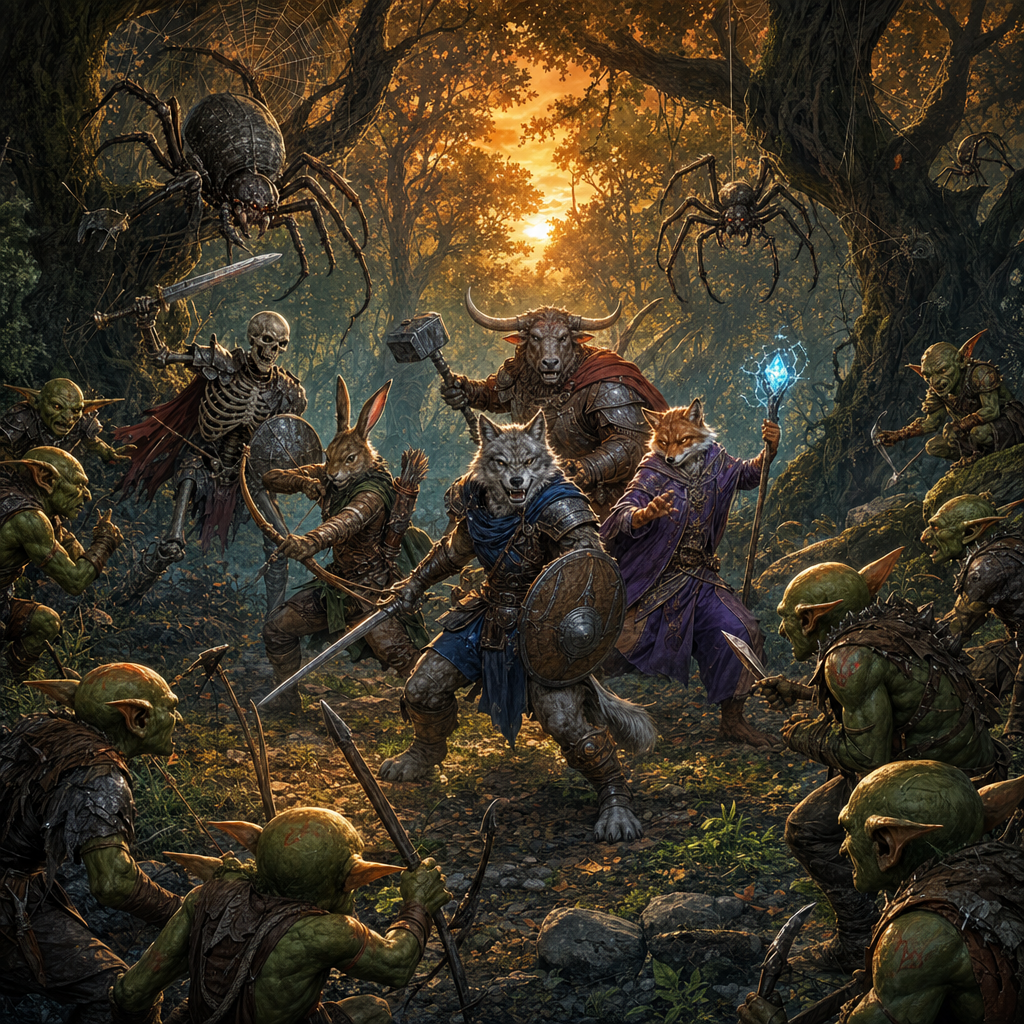
Goblins get dismissed as "starter enemies," but they're secretly brilliant. With their Nimble Escape ability, they can disengage or hide as a bonus action, which means smart goblins don't stand still trading blows—they dart behind cover, take potshots, and scatter when things go south. This teaches new players about movement, cover, and action economy without lecturing them.
I once ran a goblin ambush where the little jerks kept hiding in the rafters of an abandoned barn. My ranger couldn't get a clean shot, and the goblins just kept plinking away with arrows. It was infuriating and perfect. That's when I learned that sometimes the best encounter isn't about damage—it's about making your players problem-solve.
Skeletons: Tactical Undead
Skeletons are wonderful because they're just complicated enough. They're vulnerable to bludgeoning damage but resistant to piercing, which creates a natural moment where players realize their weapon choices matter. The wizard's staff suddenly becomes more valuable than the rogue's rapier.
They also provide an easy difficulty slider. One or two skeletons? Creepy but manageable. Six skeletons led by a skeleton warrior? Now you've got a proper fight that might require the party to actually work together.
Giant Spiders: Terrain as Threat
What makes giant spiders great isn't their damage—it's their web ability. Restrained characters can't move, they have disadvantage on attacks and Dexterity saves, and attacks against them have advantage. Suddenly the fighter who usually charges into melee is stuck twenty feet away, and the party has to adapt.
Plus, you can place spider encounters anywhere: forests, dungeons, abandoned buildings, that weird shed behind my barn where I absolutely refuse to go after dark because I value my sanity.
Underrated Creatures That Punch Above Their Weight
Bandits and Thugs
Human enemies get overlooked because they're not "fantasy" enough, but bandits are secretly perfect low-level antagonists. They can talk, they can surrender, they can reveal plot hooks, and they can make morally complicated choices that orcs just... can't.
A bandit who begs for mercy and claims he's only stealing to feed his family? That's a story moment. That's character development. That's the kind of encounter your players remember five campaigns later.
Stirges
These mosquito-bat nightmares are hilarious and horrifying in equal measure. They attach to characters and drain blood automatically each round until they're killed or detach. Low damage, but the psychological effect of "there's a thing STUCK TO ME" is pure gold.
They also swarm, which means you can throw a bunch of them at a party without the math getting complicated. Four stirges? That's just four identical attack rolls. Easy for the DM, memorable for the players.
Wolves
Wolves have Pack Tactics, giving them advantage on attack rolls if an ally is within five feet of their target. This is elegant design—it rewards the wolves for working together and punishes players who get isolated. It's also a preview of how more dangerous creatures will behave later.
I grew up around dogs on the farm, and let me tell you: my border collie Jake had better tactical awareness than half my player characters. He knew when to circle, when to press an advantage, when to back off. Wolves should feel smart and coordinated, not like random encounter fodder.
Building Encounters That Actually Challenge Low-Level Parties
The secret to good low-level encounters isn't using tougher monsters—it's using common monsters smarter. Here's what works:
- Mix creature types: Two goblins plus one wolf is more interesting than three goblins. The wolf threatens the back line while the goblins skirmish.
- Use terrain: A fight across a rickety rope bridge changes everything. Suddenly movement matters, positioning matters, and that goblin's shove attack becomes genuinely scary.
- Give enemies goals beyond "kill all the PCs": Bandits trying to steal supplies and escape create different tactical challenges than bandits fighting to the death. Maybe the goblins are protecting their young, or the skeletons are guarding a specific doorway.
- Remember action economy: Four creatures with +3 to hit and 1d6+1 damage are usually more dangerous than one creature with +5 to hit and 2d8+3 damage, because they get four times as many attacks.
When to Upgrade Beyond the Basics
Around level 3 or 4, your party starts outgrowing basic goblins and skeletons. That's when you need to either increase the numbers significantly (which can slow combat to a crawl) or start introducing more complex creatures. Watch for these signs:
- Combats consistently end in two rounds or less
- Players stop using resources (spells, abilities, potions) because they don't need them
- Nobody's dropped below half health in three sessions
- The wizard is casting cantrips exclusively because they're saving spell slots for "real fights"
That's your signal to introduce young dragons, ogres, hags, or other CR 2-4 creatures that bring new mechanical wrinkles to the table.
Creating Custom Low-Level Monsters That Feel Personal
Here's where things get fun. Sometimes the most memorable low-level encounter isn't from the Monster Manual—it's something you built yourself. I once uploaded a photo of my goat Biscuit to Creature Forge AI's character generator, and it turned her into this ornery caprine beastfolk druid with an attitude problem and a staff made of twisted vine. Biscuit the goat was stubborn and head-butted anything that annoyed her. Biscuit the NPC had those same qualities, just with spell slots.
That's the magic of creating custom content for low-level play. You can build encounters that connect to your players' actual lives, their inside jokes, their shared experiences. A goblin warband is fine. A goblin warband led by a boss whose personality quirks match your friend's incredibly dramatic cat? That's a story.
The tool lets you generate full stat blocks, personality traits, and even artwork that actually looks like your source material. For DMs running homebrew campaigns, that's invaluable—especially at low levels when you need a lot of NPCs and monsters quickly.
The Bottom Line on Low-Level Monster Selection
The common low level D&D monsters aren't flashy. They don't have legendary actions, they can't reshape reality, and they definitely won't make your players quote Tolkien. But they're where most campaigns begin, where most players learn the game, and where most of your actual table time happens.
Choose creatures that teach tactical lessons. Use terrain and objectives to add complexity without adding math. Mix creature types to create interesting action economies. And don't be afraid to customize—whether that's giving your goblins specific personalities or using tools like Creature Forge AI to build something entirely new from a photo of your weirdly photogenic barn cat.
The best low-level encounters aren't about challenge ratings or optimal balance. They're about creating moments where your players feel clever, where they develop tactics they'll use for the rest of the campaign, and where everyone leaves the table excited for next session.
And if your players still somehow manage to die to a couple of goblins? Well. That's D&D. Pour one out for all the level-one characters who learned the hard way that even common monsters deserve respect.
Ready to build your next memorable low-level encounter? Try Creature Forge AI to generate unique monsters, or upload photos of your pets, friends, or that one rooster who terrorized your childhood to create custom NPCs that'll make your campaign unforgettable. Because every great adventure starts somewhere—usually with goblins, but sometimes with a goat.