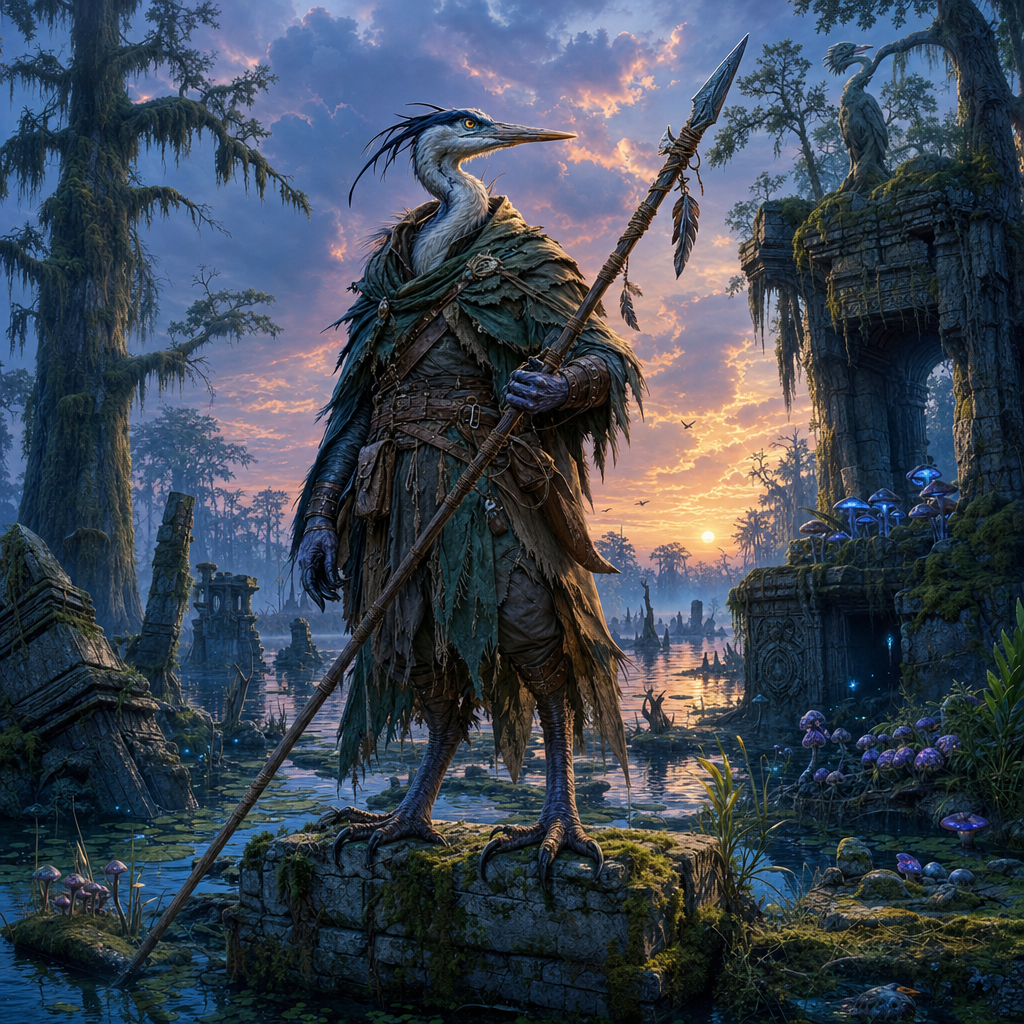
The first time I heard about Brenmarch, I was three hours into a solo campaign that had stalled out somewhere between "the party enters the tavern" and "I have no idea what happens next." I needed a setting that wasn't just a backdrop—something with enough texture and built-in conflict that I could drop a character in and watch the story unfold. Brenmarch delivered exactly that, and then some.
If you're unfamiliar, Brenmarch is a D&D setting that leans into the atmospheric and the political. It's not a sprawling empire or a glittering city-state. It's a marshland—vast, ancient, and contested. The kind of place where the fog never quite lifts, where every faction has a claim to the land, and where magic doesn't announce itself with fireworks but seeps up through the mud like groundwater.
What Makes Brenmarch Different
Most fantasy settings give you clear-cut kingdoms, obvious villains, and a map that makes sense at a glance. Brenmarch does the opposite. It's a region defined by ambiguity. There are no straight roads, no tidy borders, and no universally agreed-upon history. Instead, you get:
- Competing factions: The Marsh Wardens (protectors of the old ways), the Ironroot Consortium (merchants and engineers draining the wetlands), and the Veil Keepers (secretive mages who believe the marsh itself is sentient).
- Environmental storytelling: The landscape isn't just scenery. It's a character. Sinkholes open without warning, will-o'-wisps lead travelers astray, and certain groves are older than any living memory.
- Moral complexity: There's no Evil Empire here. Every faction believes they're doing the right thing, which makes every encounter a potential negotiation, betrayal, or uneasy alliance.
For a solo player like me, this is gold. I don't need a DM to inject drama—Brenmarch does it for me. My border collie, Scout, became a lupine ranger in one of my campaigns (I uploaded a photo to Creature Forge AI's character generator and got a beastfolk scout with her exact markings). She was caught between the Wardens and the Consortium, and suddenly I had three sessions' worth of material just from that tension.
Core Themes and Campaign Hooks
Brenmarch works because it gives you themes that resonate without forcing a single narrative path. Here are the big ones:
Preservation vs. Progress
The Marsh Wardens want to keep Brenmarch wild and untouched. The Ironroot Consortium wants to drain sections of the marsh, build roads, and turn it into profitable farmland. Neither side is wrong, exactly. This is the kind of conflict that makes players think, not just roll initiative.
Forgotten History
The marsh is littered with ruins—some overgrown, some submerged, all mysterious. Who built them? Why were they abandoned? The Veil Keepers claim the marsh has a memory, that it remembers every civilization that rose and fell here. Exploring these ruins can lead to treasure, curses, or revelations that reshape the campaign.
Isolation and Community
Settlements in Brenmarch are small, scattered, and fiercely protective of their own. Strangers are met with suspicion. Trust is earned slowly. This creates natural roleplay opportunities and makes every NPC memorable—not because they have elaborate backstories, but because they have something to lose.
Populating Brenmarch: Creatures and NPCs
A setting is only as good as the people and monsters that inhabit it. Brenmarch calls for creatures that feel native to the environment—things that slither, lurk, and adapt. Here's how I approach it:
Monsters That Belong
Forget dragons and beholders (unless you have a very good reason). Brenmarch is home to:
- Bog hags: Twisted, cunning, and territorial. They don't attack outright—they bargain, curse, and manipulate.
- Marsh drakes: Smaller, more aggressive cousins of true dragons. Amphibious, poisonous, and quick to anger.
- Living vines: Not quite plant, not quite creature. They strangle, entangle, and sometimes whisper.
- Will-o'-wisps: Classic, but essential. They're Brenmarch's signature hazard, luring the lost deeper into the swamp.
I used Creature Forge AI's monster generator to create a custom bog serpent for one encounter—a massive constrictor with bioluminescent scales that hunted by luring prey with false lights. It was perfect for the tone: beautiful, dangerous, and impossible to predict.
NPCs With Personality
The best NPCs in Brenmarch aren't adventurers—they're locals. The ferry operator who insists on payment in stories, not coin. The herbalist who knows every plant in the marsh and refuses to share her knowledge with outsiders. The child who claims to have seen something moving beneath the dock.
One of my favorite moments came when I needed a faction leader for the Veil Keepers. I didn't want a stereotypical wizard. I wanted someone who felt like they belonged to the marsh. So I rolled up an elderly lizardfolk woman named Kess, who spoke in riddles and kept a collection of objects "borrowed" from the marsh's memory. She wasn't powerful because of spells—she was powerful because she understood the land in a way no one else did.
Running Brenmarch Solo
If you're playing solo, Brenmarch is a dream. The setting does half the work for you. Here's my process:
- Pick a faction: Align your character with one (or none) and let that drive the story.
- Use random tables: Weather, encounters, rumors. The unpredictability matches the setting's tone.
- Let the environment create obstacles: A bridge collapses. The fog thickens. A path floods overnight. These aren't setbacks—they're story beats.
- Ask questions: "Why does this NPC distrust me?" "What's the Consortium hiding?" Let the answers emerge through play.
I ran a solo campaign where my character was a cartographer trying to map the marsh. Every session, I rolled to see what she discovered: a ruin, a creature, a settlement. By session six, the map was incomplete, she'd made enemies with the Consortium, and she'd uncovered evidence of something ancient and still active beneath the water. I didn't plan any of that. Brenmarch just kept giving.
Tips for DMs Running Brenmarch
If you're running this for a group, lean into the setting's strengths:
- Make navigation matter: The marsh shifts. Paths flood. Landmarks disappear. Don't let players auto-pilot through travel.
- Use faction reputation: Actions have consequences. If the party helps the Wardens, the Consortium remembers. If they stay neutral, everyone suspects them.
- Slow-burn mysteries: Don't explain everything. Let players piece together the history of the marsh through fragments, clues, and unreliable narrators.
- Reward creativity: A player wants to negotiate with a bog hag? Let them. Someone tries to win over a suspicious village elder? Make it possible, but hard-earned.
Custom NPCs for Atmosphere
Brenmarch NPCs should feel weathered, watchful, and wary. I've had great luck using Creature Forge AI's NPC generator to create characters that match the tone—fishers with haunted eyes, scouts who speak in clipped sentences, herbalists who've seen too much. You can even upload a photo to create an NPC based on someone real (I turned my tabby cat into a feline merchant who traded in rare fungi, and she became a recurring favorite).
Why Brenmarch Works for Every Playstyle
Whether you're running a gritty survival campaign, a political intrigue game, or a character-driven story, Brenmarch adapts. It's modular. You can emphasize the factions, the environment, the mysteries, or all three. You can run it as a sandbox or a structured campaign. You can drop it into an existing world or let it stand alone.
For me, sitting at my kitchen table with a mug of coffee and a half-finished map, Brenmarch was the setting that taught me how much a place can shape a story. It's not flashy. It doesn't compete for attention. It just exists, patient and persistent, waiting for you to step into the fog and see what happens next.
If you're looking to populate your version of Brenmarch with creatures that feel native to the marshlands—or NPCs who carry the weight of the setting in their voices—Creature Forge AI makes it easy. Upload a photo, tweak the details, and watch a character come to life. The marsh remembers everything. Make sure your players do, too.