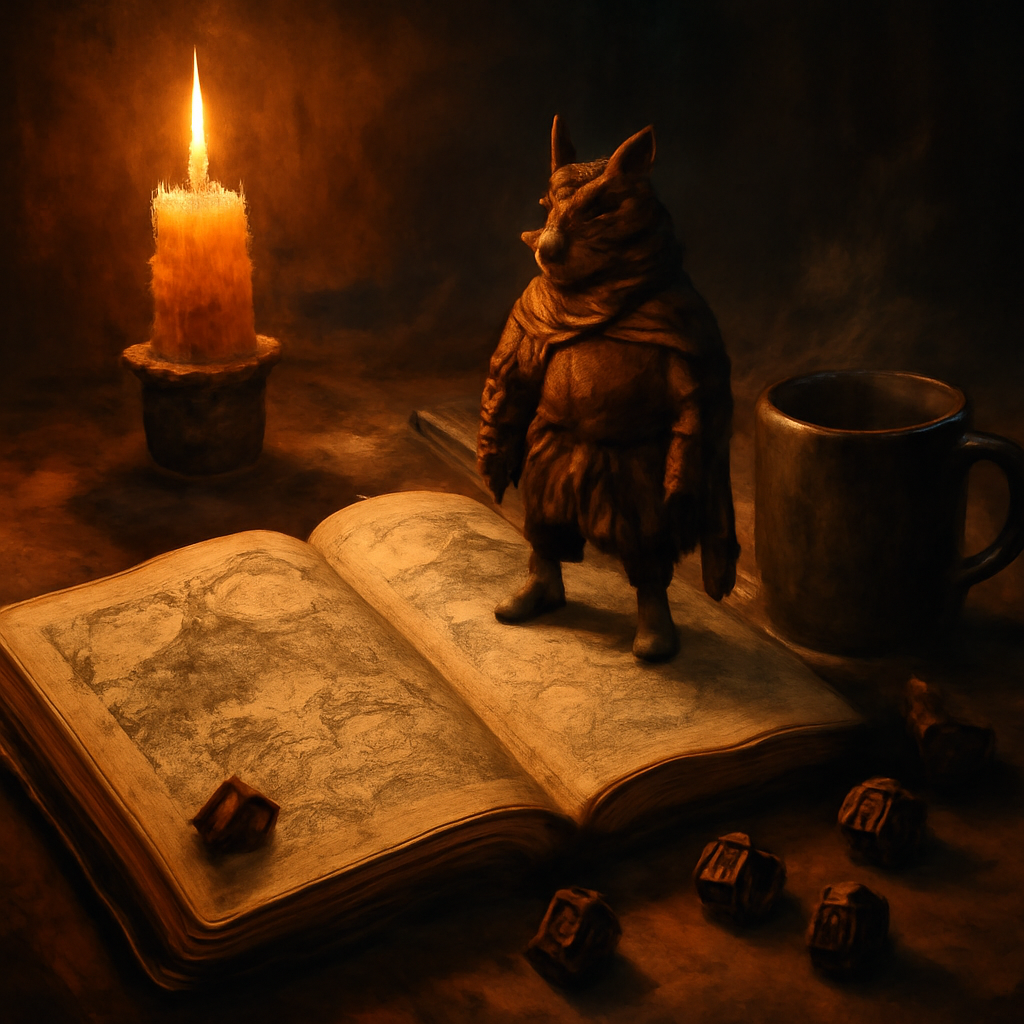
I discovered solo tabletop gaming the same way most people discover their favorite late-night habit: by accident, out of necessity, and with a cup of coffee that had gone cold two hours earlier. After long days on the farm—feeding animals, mending fences, dealing with Biscuit the goat's ongoing vendetta against the chicken coop door—I needed something that was just mine. No scheduling. No waiting for the group. Just me, some dice, and whatever story wanted to unfold.
The problem? Solo TTRPG play can feel empty if you don't have the right tools. You need something to surprise you, to generate the chaos and unexpected turns that a DM or other players would normally provide. After years of experimenting, I've found the best solo TTRPG tools that actually deliver on that promise.
What Makes a Solo TTRPG Tool Actually Good?
Before we dive into specific resources, let's talk about what separates useful solo tools from digital clutter. The best solo TTRPG tools share a few key qualities:
- They surprise you. Predictability is the death of solo play. Good tools generate results you didn't see coming.
- They're fast. You're playing alone—you don't want to spend twenty minutes cross-referencing tables when you should be in the action.
- They spark creativity rather than replacing it. The tool gives you a prompt; you make it meaningful.
- They feel personal. Generic fantasy slop doesn't cut it. You need results that feel specific and alive.
Oracles: Your New Best Friend
If you're new to solo play, oracles are your foundation. These are simple yes/no/maybe systems that answer questions when you don't have a DM. "Does the tavern keeper know about the murders?" Roll. "Is the forest path safe?" Roll again.
Mythic GME
The Mythic Game Master Emulator is the gold standard. It's not just a yes/no oracle—it's got a chaos factor that escalates when things get wild, and random event tables that inject unexpected twists. I've had entire session arcs emerge from a single Mythic event roll. The only downside is the learning curve. You need to spend a session or two getting comfortable with the system before it feels natural.
MUNE
If Mythic feels too complex, try MUNE (Mythic Universeless Emulator—yes, someone made a simpler version of Mythic and gave it a cheeky name). It's streamlined, pay-what-you-want, and gets out of your way fast. Perfect for when you just want to play.
Creature and NPC Generators
Here's where solo play used to fall apart for me. I could handle plot twists and location descriptions, but populating the world with interesting creatures and NPCs? That took time I didn't have at eleven PM on a Tuesday.
Creature Forge AI
This is the tool that changed my solo sessions completely. Creature Forge AI generates full stat blocks for D&D 5e monsters, but the real magic is the customization. You can upload a photo—any photo—and it'll build a creature or character around it.
I uploaded a picture of my border collie, Maggie, on a whim one night. What came back was a Lupine ranger with her exact coloring, intelligent eyes, and even something in the character background about loyalty and herding instincts. Suddenly I had a companion NPC who felt real because she was based on something real. That's the kind of personal touch that keeps solo play from feeling lonely.
The NPC generator works the same way—give it a photo or a prompt, and you get a full character with personality traits, ideals, bonds, and flaws. No more generic "gruff tavern keeper." You get someone specific, someone you can actually roleplay against.
Donjon
For quick, no-frills random generation, Donjon's suite of tools is hard to beat. Random town generator? Check. Treasure generator? Done. It's utilitarian rather than inspiring, but when you need something fast, it delivers.
Journaling and Campaign Tracking
Solo play generates a lot of information fast, and if you don't track it, you'll lose threads you care about. Trust me—I once forgot the name of my character's revenge target halfway through a campaign because I didn't write it down.
Obsidian
Obsidian is a free note-taking app that's become my campaign bible. It uses markdown, links notes together, and lets you build a wiki of your own world. I've got notes for every NPC, location, and plot thread, all cross-referenced. When I need to remember what the blacksmith in Millhaven told me four sessions ago, it's right there.
Good Old Physical Journals
Sometimes a notebook and a pen beat any app. There's something about writing by hand that makes the story stick. I keep a cheap spiral notebook next to my dice tray and jot down key moments in real time. It's messier than Obsidian but more intimate.
Random Tables and Prompt Generators
Random tables are the backbone of solo play. They're simple, fast, and infinitely reusable.
The Game Master's Apprentice Deck
This is a deck of cards with icons, words, and images designed to spark ideas. Draw a card when you need inspiration for a scene, NPC motivation, or plot twist. It's tactile, visual, and genuinely useful. I keep mine in my dice bag.
Rory's Story Cubes
Technically not a TTRPG tool, but these dice with symbols on each face work beautifully for solo play. Roll a handful and interpret the images as narrative prompts. A lightning bolt, a key, and a tree? Sounds like the old hermit has information locked away that'll cost me something dangerous to access.
Adventure Modules Designed for Solo Play
Some adventures are built specifically for one player, with branching paths and systems that don't require a DM.
Four Against Darkness
This is a dungeon-crawling game system that uses pencil, paper, and dice. You map as you explore, rolling for room contents and encounters. It's crunchy in the best way—tactical without being tedious. Great for when you want combat-focused solo sessions.
Ironsworn
Ironsworn is a full TTRPG system designed for solo or co-op play with no GM. It's got built-in mechanics for tracking vows, managing momentum, and resolving challenges. The setting is Norse-inspired, gritty, and compelling. If you're serious about solo play, learn Ironsworn. It's free, it's brilliant, and it'll teach you how solo mechanics can feel just as robust as group play.
Bringing It All Together
The best solo TTRPG tools aren't the ones with the most features—they're the ones that disappear into your play experience. You stop thinking about the tool and start thinking about the story.
My current setup looks like this: Mythic for oracle questions and chaos, Creature Forge AI when I need creatures or NPCs that feel personal and specific, Obsidian for campaign tracking, and a physical journal for in-the-moment notes. Some nights I'll pull out the Game Master's Apprentice deck if I'm stuck. Other nights I barely touch anything except dice and imagination.
One evening last month, I generated a Tabaxi rogue based on a photo of the barn cat who thinks she owns the property. The character had her exact attitude—aloof, clever, motivated entirely by self-interest but secretly fond of the people who feed her. That NPC ended up betraying my character, then saving him three sessions later for reasons she refused to explain. It was perfect. It felt real. That's what the right tools can do.
Start Simple, Build From There
If you're new to solo TTRPG play, don't try to use every tool at once. Start with an oracle system like MUNE and a simple journal. Play a few sessions. When you find yourself wishing you could generate something faster or more interesting, that's when you add a new tool.
Solo play isn't a compromise. It's a different kind of magic—quieter, more personal, entirely yours. The tools just help you unlock it.
If you're looking for a way to populate your solo campaigns with creatures and characters that actually feel meaningful, give Creature Forge AI a try. Upload a photo of your pet, your favorite fictional character, or even yourself. See what comes back. You might be surprised how much a tool can feel like collaboration.