Why Animal Races Make D&D More Fun
I've been playing solo D&D campaigns for years—late nights at my kitchen table, coffee going cold, dice scattered across my notebook. And I'll tell you what: the moment I stopped making "just another human fighter" and started rolling up animal-based characters, everything got more interesting. The best animal races for D&D 5e aren't just mechanically solid—they give you instant personality, built-in quirks, and a reason to actually roleplay instead of just rolling dice.
My border collie, Keeper, has more natural charisma than half the NPCs I've ever written. One night I got the idea: what if I could actually play as him? Not just flavor a character with dog-like traits, but build something that genuinely felt like Keeper—loyal, clever, a little neurotic about keeping the party together. That's when I realized the real magic of animal races: they let you tap into personalities you already know and love.
The Classic Picks: Official Animal Races in 5e
Let's start with what's already in the books. These are the best animal races for D&D 5e straight from Wizards of the Coast, each with solid mechanical support and rich lore.
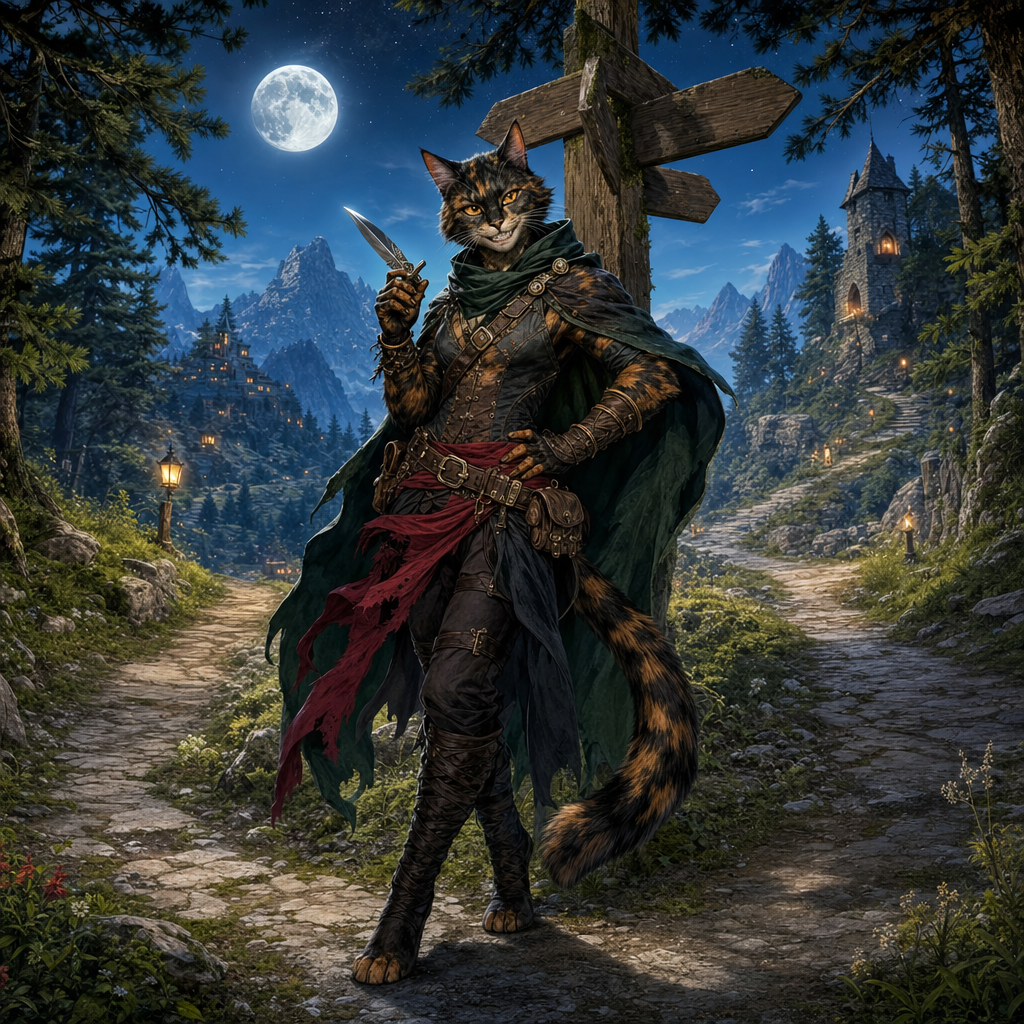
Tabaxi: The Feline Speedsters
If you've ever watched a cat go from zero to zoomies in three seconds flat, you understand tabaxi. Their Feline Agility feature lets them double their movement speed for a turn, perfect for hit-and-run tactics or just dramatically leaping onto things.
- Best for: Rogues, monks, rangers
- Ability bonuses: +2 Dexterity, +1 Charisma
- Flavor win: Built-in climbing speed and claws that work as natural weapons
- Roleplay hook: Insatiable curiosity—tabaxi are collectors of stories and secrets
I ran a tabaxi rogue in a solo urban campaign once, and the climbing speed made every chase scene feel like a Hong Kong action movie. Plus, you get to describe knocking things off tables in-character.
Aarakocra: The Bird Folk
Flight at first level. That's the whole pitch, and it's a good one. Aarakocra are bird-people with a 50-foot fly speed, which some DMs love and others ban immediately. If your table allows it, you're basically playing a character who laughs at terrain.
- Best for: Druids, clerics, rangers
- Ability bonuses: +2 Dexterity, +1 Wisdom
- Flavor win: Talons as natural weapons (1d4 slashing)
- Roleplay hook: Sky-dwellers who find ground-bound life claustrophobic
The tradeoff? You're fragile and you can't wear heavy armor (wings, remember?). But if you've ever wanted to scout ahead, drop rocks on enemies, or just perch on a rafter looking smug, aarakocra deliver.
Lizardfolk: The Swamp Survivors
Lizardfolk don't mess around. They get natural armor (13 + Dex modifier), a swimming speed, and the ability to hold their breath for 15 minutes. Oh, and Hungry Jaws—a bite attack that lets you heal yourself in combat by, uh, snacking on your enemies.
- Best for: Druids, barbarians, rangers
- Ability bonuses: +2 Constitution, +1 Wisdom
- Flavor win: Cunning Artisan lets you craft tools and weapons from slain beasts
- Roleplay hook: Practical, unsentimental survivors who confuse other races' emotions
Lizardfolk are perfect if you want to play someone utterly pragmatic. "Why are you crying over that dead guard?" "Because I knew him." "I do not understand. He is meat now."
Tortle: The Walking Fortresses
Tortles are exactly what they sound like: turtle-people with massive shells and a chill, wandering lifestyle. Their Shell Defense action lets you withdraw completely, bumping your AC to 17 and giving you advantage on Strength and Constitution saves. You're basically a tank with legs.
- Best for: Clerics, druids, paladins
- Ability bonuses: +2 Strength, +1 Wisdom
- Flavor win: Natural AC of 17 (no armor needed)
- Roleplay hook: Nomadic philosophers seeking life experience
I love tortles for solo play because they're nearly impossible to kill at low levels. You can bunker down, heal up, and outlast just about anything.
Kenku: The Crow Mimics
Kenku are cursed corvid-folk who can't speak in their own voices—they can only mimic sounds they've heard. Mechanically, this gives you Mimicry (duplicate any sound or voice) and advantage on Dexterity (Stealth) checks. Creatively, it makes every conversation a puzzle.
- Best for: Rogues, bards, artificers
- Ability bonuses: +2 Dexterity, +1 Wisdom
- Flavor win: Expert Forgery—advantage on creating written fakes
- Roleplay hook: The voice thing. Seriously, it's a whole vibe.
Fair warning: kenku require buy-in from your table. Done poorly, the mimicry gimmick gets annoying. Done well? You're the most memorable character at the table, speaking only in stolen phrases and eerie sound effects.
Homebrew Favorites: Expanding the Menagerie
The official roster is great, but the best animal races for D&D 5e often come from homebrew communities. Here are a few that show up constantly and actually feel balanced:
Lupine/Wolfborn
Wolf-people with pack tactics, enhanced smell, and a bonus to either Strength or Dexterity. Usually feature a "pack hunter" ability that gives advantage on attacks if an ally is within 5 feet of your target. Great for barbarians, rangers, and anyone who wants to lean into the loyal-warrior archetype.
Corvum (Humblewood)
The Humblewood campaign setting added several bird races, and corvum (crow-folk) are standouts. They get a glide ability, proficiency in Deception or Insight, and a knack for languages. Think kenku, but chattier and more charming.
Rabbitfolk/Harengon
Officially added in The Wild Beyond the Witchlight, harengon are hare-people with rabbit hop (add proficiency bonus to jump distance and initiative rolls) and the ability to add 1d4 to a failed Dexterity save once per long rest. They're skittish, lucky, and surprisingly tanky.
Making Your Own: Turn Your Pet Into a Character
Here's where it gets personal. I've got a dozen animals on my farm—Biscuit the goat, Hester the chicken, Keeper the dog. And I've always wanted to play them, not just name NPCs after them. The problem? D&D doesn't have stats for "neurotic border collie" or "goat with an attitude problem."
That's exactly why I use Creature Forge AI's character generator. You can upload a photo of your actual pet, describe their personality, and it'll build a complete 5e character—race, class, stats, abilities, even a backstory that fits. I uploaded a picture of Keeper, said "loyal, anxious, herding instinct," and got back a beastfolk ranger with pack tactics and a shepherd background. The art even looked like him—same coloring, same intense stare.
It's not just flavor. When you're playing a character that's literally based on a personality you know—your dog's loyalty, your cat's chaos energy, your parrot's gossip habit—you don't have to think about what they'd do. You already know.
How to Choose the Best Animal Race for Your Game
Not all animal races fit all tables. Here's how to pick:
Consider Your Campaign Setting
Aarakocra make less sense in an underground drow city. Lizardfolk thrive in swamp campaigns but feel out of place in a frozen tundra (unless you lean hard into "confused cold-blooded tourist"). Talk to your DM about what fits the world.
Match Mechanics to Class
The best animal races for D&D 5e have synergy with their classes. Tabaxi make fantastic rogues (Dexterity + mobility). Lizardfolk barbarians are nearly unkillable (Constitution + natural armor + temp HP from bites). Tortles pair beautifully with Strength-based clerics who don't want to wear heavy armor.
Lean Into the Roleplay
Don't just pick "cat person because cats are cool." Think about how being a cat person affects your character's worldview. Do they trust easily? How do they feel about water? What do they do when they're nervous?
The best characters come from digging into these small details. My tabaxi knocked a crucial potion off a table mid-boss-fight because I rolled low on Dexterity and decided "yeah, that tracks." The table loved it. Mechanics met personality.
Final Thoughts: Play What You Love
The best animal races for D&D 5e aren't the ones with the highest stat bonuses or the flashiest abilities. They're the ones that make you want to play—the ones that give you a reason to care about your character beyond their damage-per-round.
Whether you're running a classic tabaxi rogue, homebrewing a wolf-pack fighter, or turning your actual pet into a playable character, the goal is the same: build someone interesting. Someone you'd want to spend a campaign with. Someone who'd make a good story.
And if all else fails, remember: my goat Biscuit has more charisma than any NPC I've ever rolled, and he once ate my character sheet. There's a lesson in there somewhere.
Ready to build your next beastfolk hero? Head over to Creature Forge AI and try the character generator—upload a photo, describe a personality, and see what kind of adventurer you get. Your pet might just be your next great character.