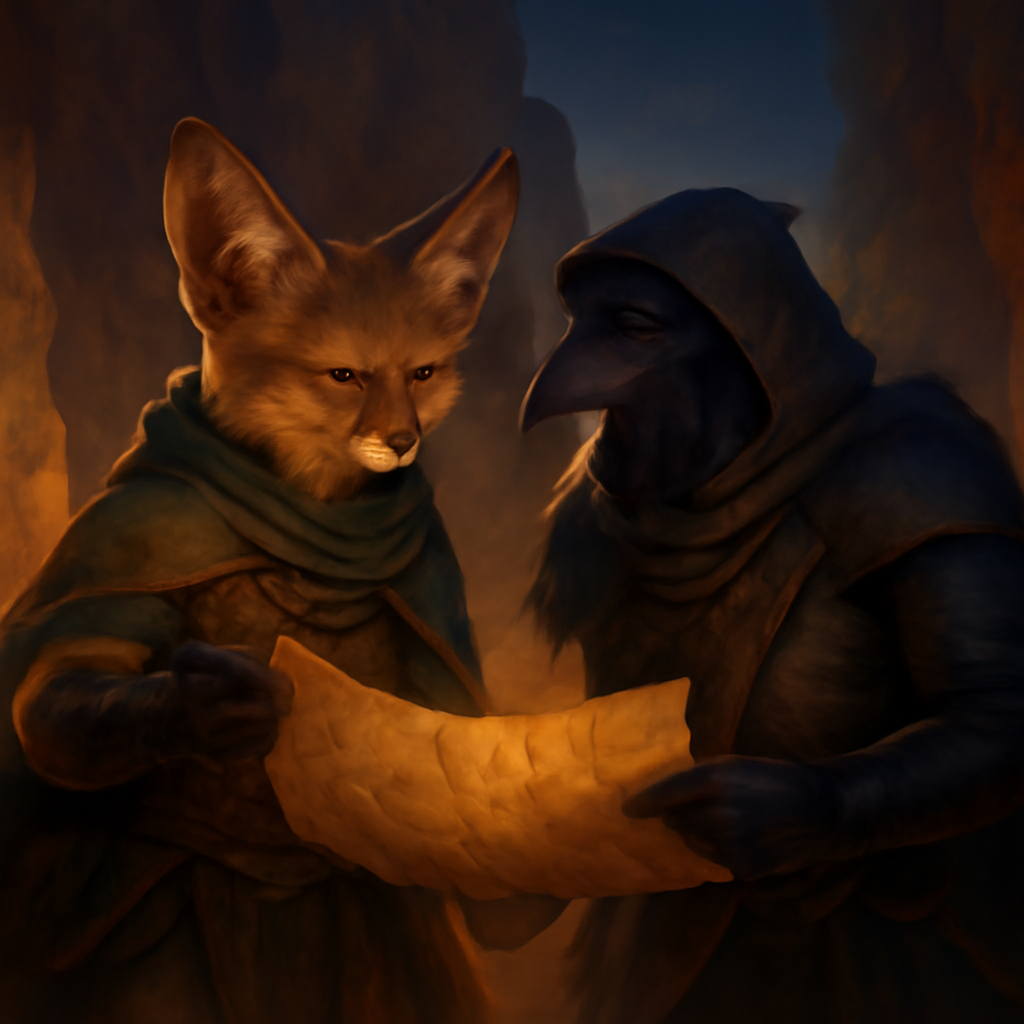
Why Most Tables Need More Beastfolk Variety
I'll be honest — I love Tabaxi. I've played three of them. But the fifth time you sit down at a table and see another cat-person rogue with a "mysterious past," you start wondering if the entire Forgotten Realms is just one big animal shelter. The thing is, when you're looking for beastfolk race ideas for D&D, you've got the entire animal kingdom at your disposal, and most of it goes completely ignored.
I grew up on a farm surrounded by animals that had more personality than half the NPCs I've run across in published adventures. My goat Biscuit could hold a grudge for weeks. Our rooster, General Patton (yes, really), ruled the henhouse with an iron talon and strategic brilliance. These weren't just "animals" — they were characters. And that's exactly what good beastfolk races should feel like: characters first, stat blocks second.
Starting With Real Animal Behavior
The secret to compelling beastfolk race ideas for D&D isn't just picking a cool animal and slapping some ability scores on it. It's about capturing what makes that creature interesting. Real animals have quirks, instincts, and behaviors that can translate into incredible roleplay hooks.
Think Beyond "This One's Fast, That One's Strong"
Sure, a cheetah-folk might get a speed bonus. But what about their hunting style? Cheetahs are sprinters, not marathon runners. They overheat. They're actually pretty timid compared to other big cats. A cheetah-based race might have incredible burst movement but suffer exhaustion penalties if they use it too often. They might be naturally cautious, preferring to observe before engaging. That's interesting.
Underrated Beastfolk Race Concepts
Corvid-Folk (Ravens, Crows, Magpies)
Aarakocra exist, but they're generic "bird people." Corvids deserve their own spotlight. These birds are problem-solvers, tool-users, and they hold grudges across generations. A corvid race could have:
- Omen Reader: Advantage on Insight checks to read intentions
- Tool Savant: Proficiency with improvised weapons and tinker's tools
- Murder Memory: Perfect recall of faces and past slights
- Gift Economy: Cultural trait around exchanging shiny objects for favors
Imagine a corvid wizard who collects spell components obsessively or a rogue who literally cannot stop stealing shiny things even when it's tactically stupid. That's a character that writes itself.
Mustelid-Folk (Otters, Badgers, Wolverines)
This family ranges from playful river otters to the absolute murder-machines that are honey badgers. An otter-person monk who's genuinely friendly and optimistic but absolutely brutal in combat? A wolverine barbarian who's small but impossibly tenacious? A badger artificer who builds elaborate underground workshops?
- Endless Energy: Resistance to exhaustion
- Slippery: Advantage on checks to escape grapples
- Aquatic Adaptation: (Otters) Swim speed and underwater breathing
- Tenacious: (Badgers/Wolverines) When reduced to 0 HP, can make one final attack before falling unconscious
Cephalopod-Folk (Octopuses, Cuttlefish)
Okay, hear me out. These creatures are weird. They have distributed intelligence (neurons in their arms), can change color and texture instantly, and solve puzzles in ways that baffle researchers. A land-adapted cephalopod race opens incredible doors:
- Chromatophore Skin: Change appearance as an action (like disguise self but limited to skin patterns/colors)
- Fluid Intelligence: Proficiency in one skill/tool changes on long rest (representing adaptable neural pathways)
- Boneless: Squeeze through spaces as if one size smaller
- Arm-Minds: Can maintain concentration on a spell while performing other actions (representing distributed thinking)
Corvid-Folk and the Solo Campaign That Changed My Mind
I didn't appreciate bird-people until I ran a solo campaign where I uploaded a photo of my neighbor's absolutely magnificent raven to Creature Forge AI's character generator. The tool built this sharp-eyed corvid investigator with this knowing expression that was perfect. I named him Riddle, and he became obsessed with solving a murder mystery in a city where everyone assumed he was just another common thief because of his race.
The whole campaign became about challenging those stereotypes while also leaning into real corvid behavior — Riddle absolutely did steal things, but only as evidence, and he kept everything organized in his little evidence nest. It was one of my favorite characters I've ever played, and it only worked because I got specific about what makes corvids different from generic bird-people.
Scaling and Proportion Matter
One thing that makes beastfolk race ideas for D&D feel fresh is playing with scale. Not everything needs to be Medium-sized.
Small but Fierce
- Mongoose-Folk: Small size, advantage on saves against poison (snake hunters), bonus action disengage
- Mantis-Shrimp-Folk: Small, terrifying unarmed strikes (these creatures hit with the force of a .22 caliber bullet), can perceive more colors than other races (mechanical advantage on Investigation checks involving color)
- Stoat-Folk: Tiny size option, camouflage in snow, can squeeze through impossible spaces
Large and Imposing
- Moose-Folk: Powerful build, charge attack with antlers, but clumsy in confined spaces (disadvantage on Stealth in dungeons)
- Elephant-Folk: Already exist as Loxodons, but deserve more love — incredible memory, natural gravitas, strong family bonds
Building Balanced Homebrew Traits
When you're crafting beastfolk race ideas for D&D, balance matters, but so does feel. A race that's technically balanced but boring isn't worth playing. Here's my framework:
The Three-Part Test
- Does it create interesting decisions? A swim speed is only interesting if water actually comes up in your campaign. A trait that changes how you approach problems is always valuable.
- Does it encourage specific character concepts without forcing them? Tabaxi work as rogues but also as bards, monks, or rangers. Good racial traits suggest archetypes but don't demand them.
- Would I want to roleplay this? Stats matter less than story hooks. A race with a cultural trait around gift-giving or a biological need that creates complications — that's where the magic lives.
Sample Homebrew: Lupine (Wolf-Folk)
Yes, there are existing wolf-adjacent races, but stick with me:
- Ability Score Increase: +2 Wisdom, +1 Strength
- Pack Tactics: Advantage on attack rolls against a creature if at least one ally is within 5 feet of it and the ally isn't incapacitated
- Keen Senses: Proficiency in Perception
- Howl of the Pack: Once per long rest, can howl to give all allies within 30 feet advantage on their next attack roll
- Lone Wolf's Burden: Disadvantage on Wisdom saves when separated from all allies by more than 60 feet (wolves are pack animals — being alone is stressful)
That last trait is the key. It's technically a drawback, but it creates story. Your lupine character now has to make real decisions about splitting the party. It encourages cooperation but can be overcome with character growth (a lupine who learns to function alone is a compelling arc).
Cultural Details That Bring Races to Life
Mechanical traits are half the equation. The cultural and behavioral details are what players actually remember.
Questions to Answer for Any Beastfolk Race
- What do they value? Corvids might value clever solutions over brute force. Elephant-folk might prioritize family and memory above individual glory.
- What do they fear? Prey animals might have cultural anxiety about open spaces. Predators might struggle with the concept of "fair fights."
- How do they communicate? Do they have tells from their animal origins? A nervous rabbit-person thumping their foot? A dog-person tilting their head when confused?
- What's their relationship with "regular" versions of their animal? Does a wolf-person see wolves as cousins, embarrassing reminders of their past, or something else entirely?
Bringing Your Beastfolk to the Table
The best beastfolk race ideas for D&D start with something you're genuinely excited about. Maybe you love red pandas. Maybe you've always thought mantises are underrated. Maybe your childhood dog had this specific way of solving problems that would make an amazing character trait.
One of the coolest features of Creature Forge AI is that you can actually upload a photo of a real animal — your pet, a wildlife photo, whatever — and it builds a fantasy character based on it. I've used this with pictures of my farm animals more times than I'll admit. Seeing Biscuit the goat rendered as a stubborn, charismatic cleric was somehow both hilarious and perfect. It's one thing to theorize about a beastfolk race; it's another to see your specific inspiration brought to life as an actual playable character.
Make It Yours
The beauty of homebrew beastfolk races is that they're yours. The official books give us a starting point, but the animal kingdom is vast and weird and full of creatures that would make incredible player characters. A peacock-person glamour bard. A honey badger barbarian who's three feet tall and fears absolutely nothing. An axolotl druid with regeneration powers and a permanent smile.
Start with an animal that fascinates you. Research its real behavior. Find the traits that feel like they'd create interesting stories at the table. Build the mechanics around the fantasy, not the other way around.
And if you need help visualizing your creation or generating a full stat block? Creature Forge AI can turn your weirdest animal-person ideas into fully-realized characters, complete with art and mechanics. Because sometimes the best way to convince your DM that yes, you absolutely need to play a mantis-shrimp monk is to show them exactly what that looks like.
The next time you're building a character, skip the cat-person. The animal kingdom is waiting, and it's weirder and more wonderful than any of us give it credit for.