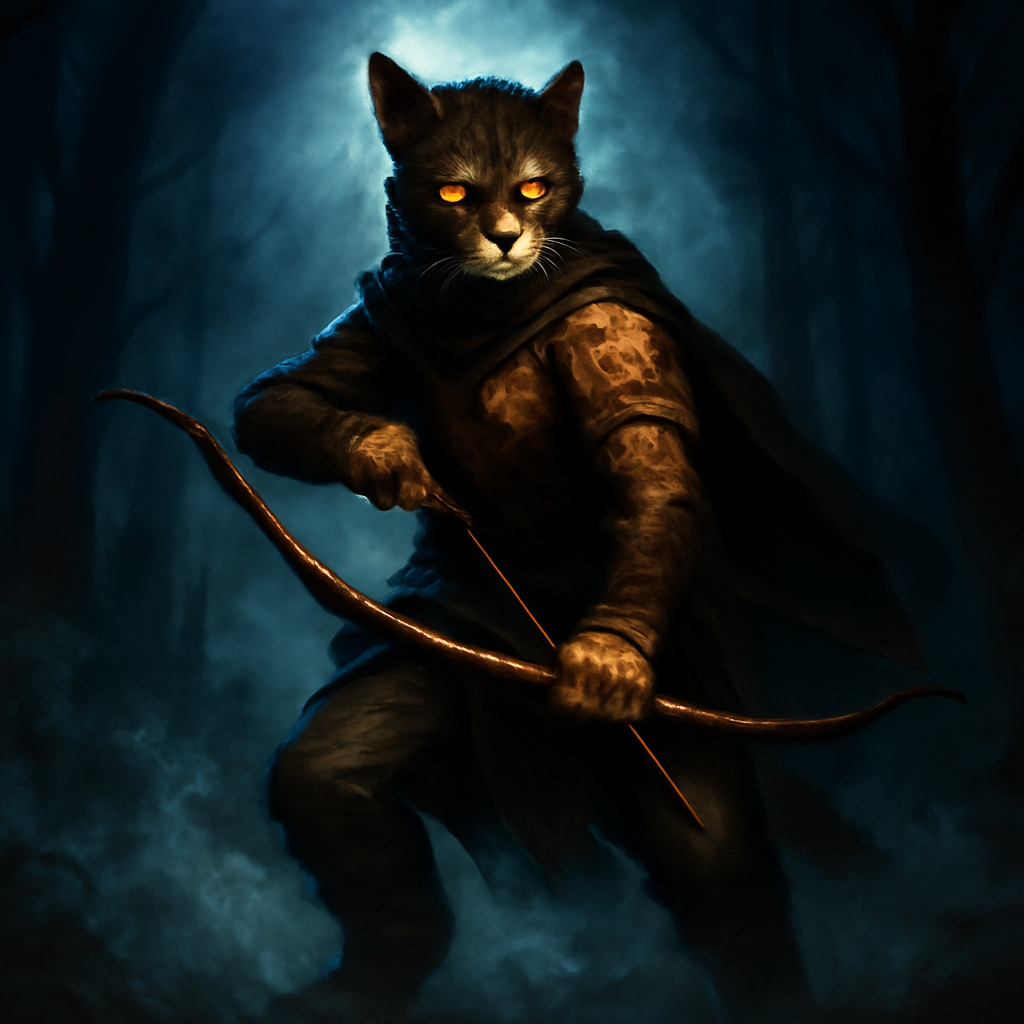
I've been thinking a lot about anthropomorphic animal character ideas lately — specifically, why so many of them feel flat. You know the type: "It's a wolf. But it walks on two legs. And it's a rogue." Cool. So is every other lupine character at the table.
The truth is, I didn't crack this until I stopped treating beastfolk like reskinned humans and started thinking about what makes an animal that animal. Not just fur and claws. Instinct. Behavior. The little things. Like how my border collie Maggie won't sit still unless she has a job to do, or how Biscuit the goat will eat anything that isn't nailed down and then try the nails.
Those details? That's where real anthropomorphic animal character ideas live.
Start With Behavior, Not Just Species
Here's the thing: slapping "cat person" onto a rogue doesn't make them interesting. What does work is building from animal behavior and letting that shape personality, flaws, and quirks.
Take a Tabaxi monk. Instead of just "fast cat with punches," what if they're obsessive about grooming? They stop mid-dungeon to clean blood off their wraps. They can't sleep in dirty conditions. It's not vanity — it's instinct, and it drives the party nuts. Suddenly you've got a character with friction, humor, and a reason people remember them.
Or a bear-folk barbarian who isn't just big and angry. Maybe they're fiercely protective of the party's food stores. They carry rations for everyone, they know exactly how many days of jerky are left, and if someone wastes food they will hear about it. That's a bear. That's also a character beat that shows up in roleplay, not just combat.
Examples by Animal Type
- Canine (Wolf, Dog, Fox): Loyalty-driven, pack-minded, struggle with being alone. A wolfen fighter who can't make decisions without consulting the group first. A foxkin bard who's clever but constantly second-guesses whether the party trusts them.
- Feline (Tiger, Lynx, Housecat): Independent, curious, easily distracted. A Tabaxi wizard who wanders off mid-quest because they spotted something shiny. A lion paladin who refuses to ask for help even when bleeding out.
- Rodent (Rat, Squirrel, Rabbit): Nervous energy, hoarders, fast talkers. A rabbitfolk rogue with a stash in every town. A squirrel druid who can't stop collecting acorns — literally, their bag is full of acorns and the DM has to keep reminding them they're over encumbrance.
- Bird (Raven, Owl, Hawk): Observant, aloof, obsessed with high places. An owlkin ranger who only feels safe sleeping in trees. A ravenfolk warlock who collects secrets like shiny objects and trades them for favors.
- Reptile (Lizard, Snake, Tortoise): Cold-blooded (literally and socially), patient, slow to trust. A tortle cleric who views every problem as something that will resolve itself given enough time. A lizardfolk barbarian who sunbathes on rocks between fights and gets sluggish in winter.
Give Them Goals That Reflect Their Nature
Generic motivation: "I want to be the best swordsman alive."
Animal-driven motivation: "I need to prove I'm the alpha in my pack, because the current leader exiled me and I can't go home until I've bested them in single combat."
See the difference? The second one is specific, it ties to instinct (hierarchy, pack structure), and it gives the DM something to work with. The best anthropomorphic animal character ideas come with built-in story hooks that make sense for the species.
Here are a few more:
- A cat-folk rogue seeking a legendary treasure — not for gold, but because it's the one thing their mentor couldn't steal.
- A bear-folk druid protecting a sacred grove that their clan has guarded for generations, even though the party wants to cut through it to save time.
- A raven-kin warlock hunting down the person who murdered their "murder" (yes, that's the term for a group of crows, and yes, you should use it).
- A rabbit-folk monk who's faster than anyone alive and deeply, deeply anxious about it — speed is survival, and stopping feels like death.
Lean Into Physicality
One mistake I see a lot: people forget their beastfolk character has a body that works differently than a human's. Use that.
Does your wolf character track by scent? Make that matter. They notice the goblin ambush because they smell torch oil and sweat before anyone sees movement. They know the bartender is lying because fear has a smell.
Does your owl character have incredible night vision? They're the one on watch every night, and they're starting to resent it. They're the one who spots the dragon on the horizon while everyone else is squinting.
Does your lizardfolk character go sluggish in the cold? That's a real vulnerability. Winter adventures become tense. They need heat sources. They move slower in the snow. It's a trade-off, and trade-offs make characters interesting.
A Trick I Learned From My Own Table
A while back, I wanted to turn Maggie — my relentlessly energetic border collie — into a D&D character. Not just "dog rogue." I wanted her personality. The way she stares at you until you give her a task. The way she gets anxious if she doesn't have a job.
So I made her a Tabaxi ranger with the Outlander background. She's a scout. She needs to be useful. If the party doesn't give her something to do, she'll invent a task — badly. She'll "guard" a random tree. She'll insist on scouting ahead even when it's a terrible idea. She's loyal to a fault and completely exhausting.
People loved her. Not because she was mechanically optimized, but because she had a personality that showed up in every session.
That's when I started using Creature Forge AI's character generator for this exact thing. You can upload a photo of a real pet, and it builds a beastfolk character that actually looks like them — right down to the fur patterns and eye color. It's a little eerie how well it works. You get a full stat block, personality traits, and even suggested backstory hooks. Turns out "turn your pet into a playable character" is a very fast way to make something you actually care about.
How to Use the Photo Upload Feature
If you've got a pet (or honestly, a favorite animal from anywhere — zoo photos work, nature documentaries work), here's the process:
- Upload a clear photo where you can see their face and coloring.
- Pick your class and background.
- Let the generator build the character — it'll match fur color, eye color, and even try to capture expression.
- Tweak the personality traits to reflect behavior, not just species.
I've done this with Maggie, Biscuit, and even my neighbor's extremely judgmental cat. Every time, the result feels more real than anything I could homebrew from scratch.
Common Pitfalls to Avoid
Let's talk about what doesn't work when brainstorming anthropomorphic animal character ideas:
- Making them just humans with ears. If you can remove the animal traits and the character is unchanged, you haven't built a beastfolk — you've built a human in a costume.
- Overplaying the "cute" factor. Unless you're going for comedy, don't make every rabbitfolk character a nervous joke machine. Give them depth. Let them be brave despite their instincts.
- Ignoring the ecosystem. Where do they come from? Do they live in cities, or are they outsiders? Are they common, or is the party staring? These details matter.
- Forgetting that animals aren't all good. Predators hunt. Scavengers steal. Prey animals panic. Let your character have an edge that's uncomfortable sometimes.
One More Trick: Invert Expectations
Sometimes the best anthropomorphic animal character ideas come from flipping the stereotype.
A timid, bookish wolf-folk who hates violence and works as a librarian. A brave, reckless turtle-folk swashbuckler who's always the first into danger. A cat-folk paladin who's selfless, loyal, and wouldn't dream of abandoning their party.
Inversions work because they're surprising, but they still need to make sense. Maybe your timid wolf was the runt, cast out of the pack for being "weak." Maybe your reckless turtle saw their slow clan get slaughtered and vowed never to hesitate again. Give the inversion a reason, and it becomes compelling instead of random.
Make It Yours
At the end of the day, the best anthropomorphic animal character ideas are the ones you want to play. The ones that make you grin when you roll initiative, that give you something to latch onto when roleplay gets quiet, that your table remembers three campaigns later.
Start with an animal you love. Think about what makes them them — not just species, but personality, quirks, the little behaviors that drive you crazy or make you laugh. Build from there. And if you want a shortcut, try Creature Forge AI — upload a photo, see what it builds, and tweak until it feels right.
Because at the end of a long day, sitting down with dice and a character who feels alive? That's the whole point.