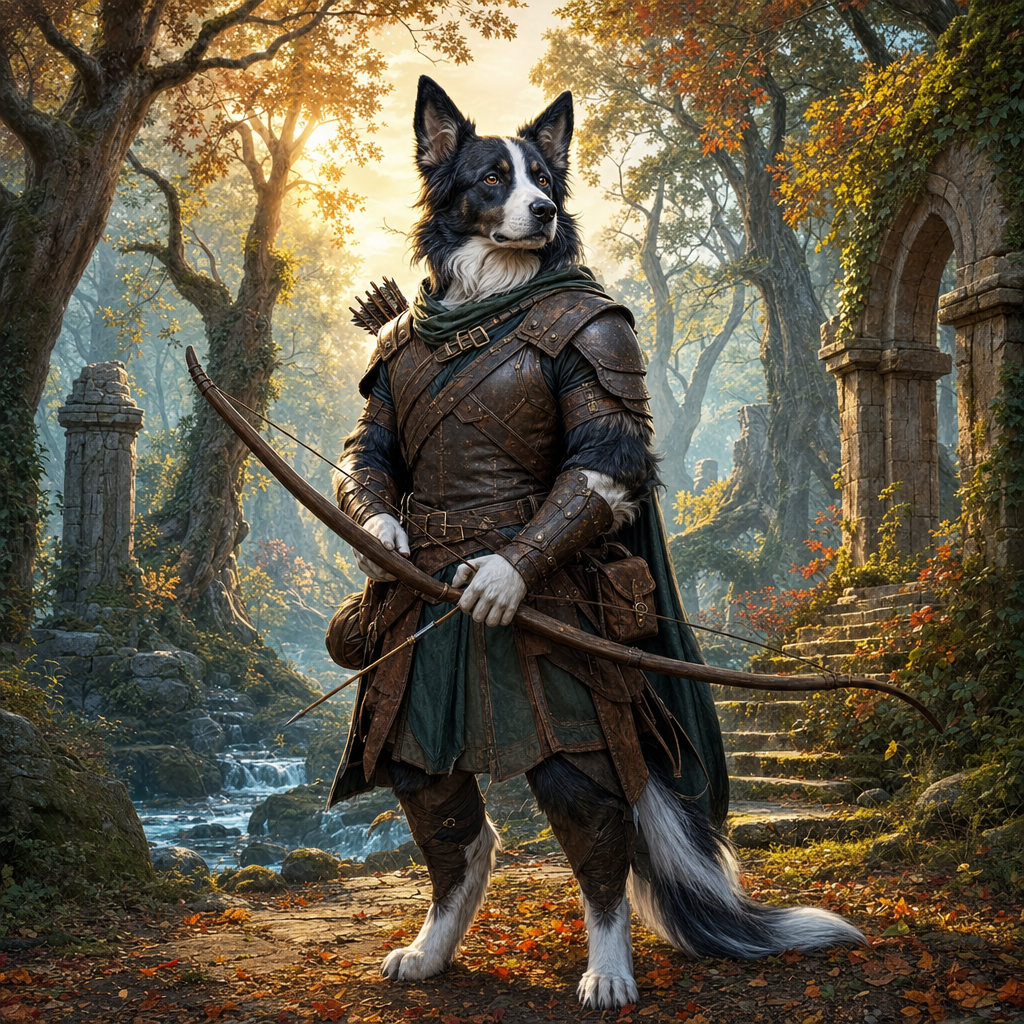
Why Animal Races D&D Campaigns Hit Different
I grew up on a farm where the animals had more personality than most people I knew. Biscuit, my goat, had charisma to spare—she'd stare you down until you handed over whatever snack you were holding. My border collie, Ranger (yes, really), was smarter than me on most days. So when I started playing D&D solo during those quiet nights after chores, I kept thinking: why can't these animals be at my table?
Animal races in D&D aren't just about playing a cat person or a bird folk from some official supplement. They're about taking the creatures you know—your pets, the livestock in your barn, the wildlife you see every day—and giving them a second life as playable characters with depth, stats, and stories worth telling.
The weird part? It works better than you'd think.
Starting With What D&D Already Gives You
Fifth edition has a surprising number of animal-inspired races already baked in. Before you homebrew anything, it's worth knowing what's on the shelf:
- Tabaxi — cat people with climb speeds and natural agility
- Aarakocra — bird folk who can fly from level one
- Kenku — corvid-inspired mimics with a tragic curse
- Lizardfolk — cold-blooded reptiles with bite attacks and natural armor
- Tortle — turtle people with shells and wisdom to spare
- Harengon — rabbit folk with lucky footwork
- Owlin — owl-based characters with flight and darkvision
These work great as-is, but here's the thing: none of them are your animal. They're someone else's idea of what a cat or bird should be in a fantasy world. And if you've spent enough time with real animals, you know they don't fit into neat little boxes.
Homebrewing Animal Races That Feel Real
When I finally sat down to turn Ranger into a playable character, I didn't start with stats. I started with behavior. What made him him? He was loyal to a fault, obsessive about routines, and could read a situation faster than I could roll initiative. Those traits mattered more than whether he got a plus-two to Dexterity.
Step One: Identify the Core Trait
Every animal has one thing they do better than anything else. Border collies herd. Goats climb. Chickens… well, chickens panic and somehow survive anyway. That core behavior should translate into a mechanical feature.
For Ranger, I gave him Herding Instinct—once per short rest, he could use a bonus action to guide an ally within 30 feet, giving them advantage on their next attack or saving throw. It wasn't overpowered, but it felt like him.
Step Two: Don't Overthink Stats
You don't need a perfectly balanced +2/+1 ability score spread. Use the Custom Lineage rules from Tasha's as a baseline, or just pick two ability scores that make sense for the animal. Dogs? Wisdom and Constitution. Cats? Dexterity and Charisma. Horses? Strength and Constitution. Chickens? Dexterity and a prayer.
Step Three: One Signature Ability
This is where you make the race fun instead of just functional. Give them one thing that makes players smile when they use it:
- Cats — always land on their feet (reduce fall damage, always land prone but not incapacitated)
- Goats — sure-footed climb speed and advantage on checks to avoid being shoved
- Crows — can mimic any sound they've heard in the last 24 hours
- Horses — can carry double the normal weight and move an extra 10 feet per turn when not wearing armor
Keep it simple. One cool thing beats three mediocre things every time.
The Secret Weapon: Uploading Photos
Here's where things get genuinely magical. I uploaded a photo of Ranger to Creature Forge AI's character generator, and it built a full D&D character sheet based on how he actually looked—his coloring, his build, even the alert tilt of his ears. The portrait looked like him, not some generic fantasy dog person.
That's the thing about animal races in D&D that no one talks about: they're only as good as the mental image you can hold in your head. And when you're staring at a character portrait that actually looks like your border collie or your cat or your ornery rooster, suddenly the whole campaign feels different. More personal. More real.
You can do this with any pet or farm animal. Upload the photo, tweak the class and background, and you've got a playable character that'll make your table do a double-take.
Balancing Animal Races Without Killing the Fun
The biggest worry players have with homebrew animal races: "Is this going to break my game?"
Short answer: probably not, if you follow one rule—trade-offs matter.
High Power = High Cost
If your animal race gets flight, they probably shouldn't also get a bonus action attack and advantage on Perception checks. Pick one strong feature and balance it with a minor drawback.
Example: A hawk-based race gets a 30-foot fly speed, but they're Small-sized and have disadvantage on Strength checks. That's a trade. It makes them think about positioning instead of just hovering above every fight like a smug drone.
Ribbon Abilities Are Your Friend
Some features sound cool but rarely affect gameplay. These "ribbon" abilities add flavor without breaking bounded accuracy:
- You can communicate simple ideas with animals of your type
- You have advantage on checks to track by scent
- You can hold your breath for twice as long as normal
- You're immune to effects that would frighten you due to loud noises
Players love these because they create memorable moments—your dog character sniffing out a hidden trap, your cat character squeezing through a gap no one else noticed—without making the DM sweat over balance.
Running a Full Animal Party Campaign
Once you've got one animal race at the table, the next question is inevitable: "Can we all play animals?"
Yes. And you should.
I ran a solo campaign where every NPC was based on a farm animal I knew. The paladin was a goat (stubborn, righteous, ate everything). The rogue was a chicken (paranoid, surprisingly deadly when cornered). The wizard was a barn owl who only spoke in questions. It was absurd and perfect.
Set the Tone Early
An all-animal party can go two ways: comedic or surprisingly serious. Decide which one you want in session zero, because a table that's half Watership Down and half Monty Python will give everyone whiplash.
Adjust the World, Not the Rules
If everyone's an animal, humans might be the monsters. Or maybe all sapient races are animal-based and no one bats an eye at the fox cleric traveling with a bear barbarian. The point is: change the setting to fit the party, not the other way around.
Using Creature Forge AI for Instant NPCs
When you're running an animal-heavy campaign, you need NPCs fast. I'm talking bartenders, quest-givers, rival adventurers—all flavored as beastfolk.
The NPC generator handles this beautifully. You can specify "a grizzled wolf merchant" or "a nervous rabbit scholar" and get a full stat block, personality traits, and a portrait in seconds. No more frantically scribbling notes while your players ask what the shopkeeper looks like.
And if you want that NPC to look like a specific animal—say, your friend's golden retriever or that one rooster who terrorized your childhood—you upload a photo and let the generator do the rest.
Common Pitfalls and How to Avoid Them
Don't Make Every Animal "Just a Human With Fur"
The worst animal races are the ones that forget they're animals. If your cat person doesn't act remotely feline, what's the point? Lean into instincts, body language, and non-human ways of solving problems.
Avoid the "Cute Pet" Trap
Animal races should be competent adventurers, not mascots. Yes, they're based on animals. No, that doesn't mean they're helpless or exist for comic relief. Let them be heroes.
Remember: Animals Don't Have Hands (Until They Do)
In D&D, anthropomorphic animal races have hands. They can hold swords, cast spells, and pick locks. You're not playing a literal dog on all fours—you're playing a dogfolk who stands upright and operates in a humanoid society. Keep that clear from the start or you'll spend half the campaign arguing about whether your character can open a door.
Why This Matters More Than You Think
Here's the real reason animal races work in D&D: they let you bring something you love into a game you love. Every time I rolled for Ranger, I thought about the real dog. His quirks became character traits. His loyalty became a play style. And when he went down in a fight, it mattered in a way a generic elf ranger never would have.
That's what homebrew is for. Not to break the game or optimize damage-per-round, but to make the story yours.
Build Your Own Animal Party
If you've been thinking about turning your pet, your favorite farm animal, or that one bird that keeps showing up at your window into a D&D character, stop waiting. Upload a photo to Creature Forge AI, pick a class that fits their vibe, and see what happens.
You might end up with the best character you've ever played.
And if nothing else, you'll finally have an excuse to tell people your goat has more charisma than their bard.