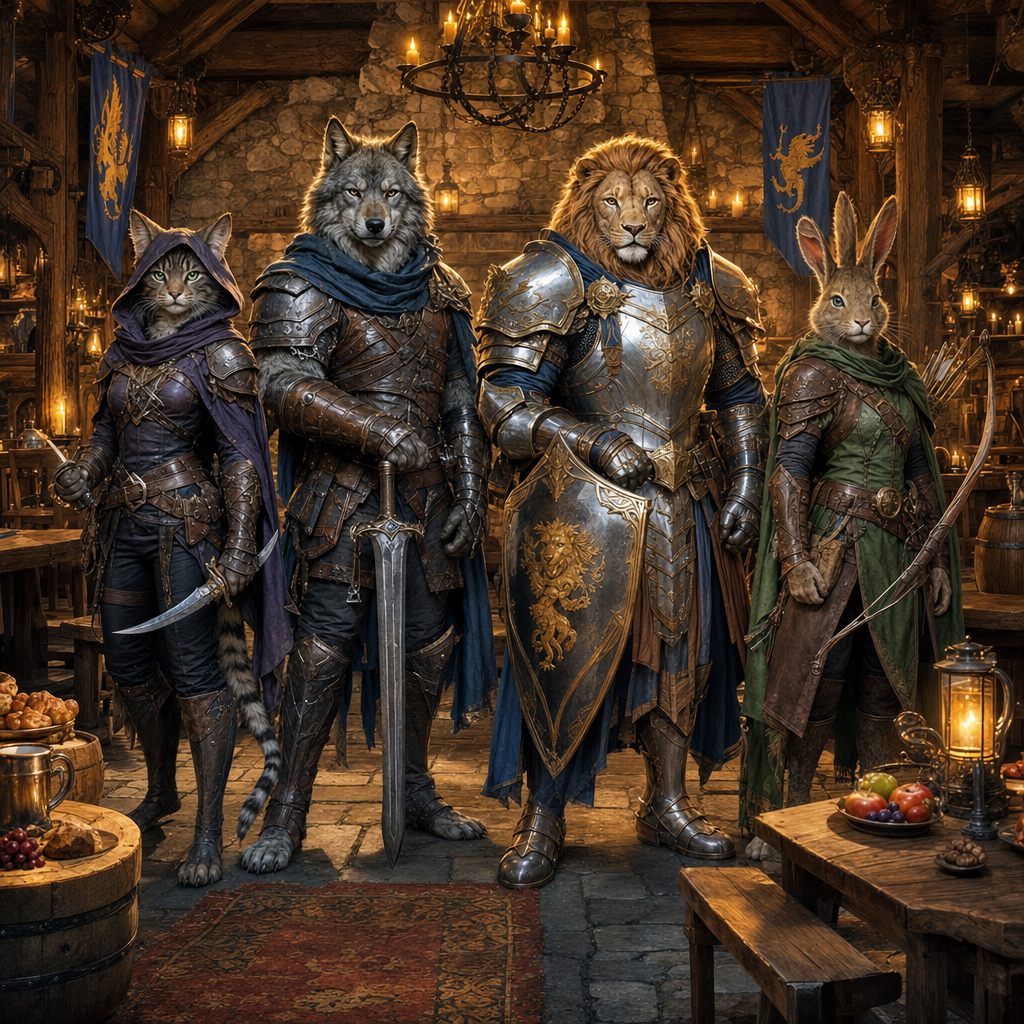
Why Animal Races Hit Different in D&D 5e
I'll be honest—the first time I rolled up a tabaxi ranger for a solo campaign, I wasn't expecting much. I just thought cats were cool. But somewhere around session three, when my character started collecting shiny trinkets and refusing to follow the main quest because a butterfly distracted her, I realized something: animal races in D&D 5e aren't just mechanics. They're personality generators.
These beast folk races—whether you're playing the leonin from Theros, the aarakocra from the Elemental Evil supplement, or a homebrew fox-person you found on Reddit—bring built-in flavor that human or elf characters have to work harder to establish. And if you've ever wanted to bring a piece of your real life to the table (say, your border collie who's smarter than half your party), animal races make that possible in ways that feel natural and fun.
Official Animal Races: What's Already in the Books
Fifth edition has given us a solid lineup of beast folk races across various sourcebooks. Here's what you're working with:
- Tabaxi (Volo's Guide to Monsters): Cat folk with a speed boost, climbing abilities, and a feline agility feature that lets them double their movement. Perfect for rogues, monks, or anyone who wants to play a character with ADHD and excellent reflexes.
- Leonin (Mythic Odysseys of Theros): Lion-inspired warriors with a roar ability that frightens enemies. Built for strength and presence—your classic paladin or fighter material.
- Aarakocra (Elemental Evil Player's Companion): Bird people with a 50-foot fly speed at level one. Powerful, sometimes campaign-breaking, always majestic.
- Kenku (Volo's Guide): Raven folk cursed to only mimic sounds they've heard. Incredible for roleplay, challenging for players who like to talk a lot.
- Lizardfolk (Volo's Guide): Reptilian survivalists with natural armor and a bite attack. Less cuddly, more "I will eat your enemies."
- Tortle (The Tortle Package): Turtle people with a natural AC of 17. Slow, steady, surprisingly tanky.
- Harengon (The Wild Beyond the Witchlight): Rabbit folk with incredible initiative bonuses and a hop ability. The newest addition to the animal race family.
Each of these races comes with mechanical benefits, but the real gold is in how they feel to play. A tabaxi bard moves through the world differently than a human bard. A leonin cleric commands a room in ways an elf just doesn't.
Homebrew and Custom Animal Races: When the Books Aren't Enough
Here's where it gets fun. The official races are great, but what if you want to play a wolf person? A fox? A bear? A raccoon rogue with a trash panda aesthetic?
Homebrew animal races are everywhere—DMs Guild, Reddit's r/UnearthedArcana, personal blogs. The quality varies wildly, but the good ones understand something important: an animal race should feel like that animal without being a joke.
When you're building or evaluating a homebrew animal race, look for:
- One or two signature abilities that capture the animal's essence (a wolf's pack tactics, a fox's cunning, a bear's raw strength)
- Balanced mechanics that don't outshine official races
- Roleplay hooks baked into the racial traits—cultural details, instincts, quirks
I once played a homebrew border collie-inspired race in a solo campaign (yes, based on my actual dog, and yes, I got way too into it). The race had advantage on perception checks involving movement and a "herding instinct" feature that let me use a bonus action to guide an ally. Mechanically solid, thematically perfect, and it made me feel like I was playing that specific kind of smart, anxious, always-watching character.
Building Your Own: The DIY Approach
If you can't find exactly what you want, build it. Use the custom lineage rules from Tasha's Cauldron of Everything as a baseline, then add one or two flavorful abilities. Keep it simple. A deer-folk race might get a movement speed boost and advantage on checks to escape grapples. A badger-person might have resistance to poison and a burrow speed.
The trick is restraint. Don't pile on abilities just because you love the animal. Pick the two or three things that make that creature that creature, and let the rest come from roleplay.
Turning Your Actual Pet Into a D&D Character
This is where things get personal. You know your dog's personality. You know how your cat moves through the world. And if you've ever thought, "what class would my pet be?"—congratulations, you're already halfway to creating an animal race character.
I've done this more times than I'll admit. My goat Biscuit became a satyr-adjacent barbarian with a headbutt attack and an inexplicable grudge against fences. My late barn cat turned into a tabaxi warlock who made a pact with a Great Old One mostly out of boredom.
The secret is specificity. Don't just make "a dog character." Make your dog. What are their quirks? What motivates them? What would they multiclass into if they got bored?
And here's the thing—Creature Forge AI's character generator lets you upload an actual photo of your pet and build a D&D character that looks like them. I'm talking full stat block, personality traits, and an illustration that captures their essence. It's the closest I've come to literally bringing my animals to the table, and it's exactly the kind of ridiculous, heartfelt thing that makes solo play (or any play) feel special.
Roleplaying Animal Races Without the Cringe
Let's address the elephant in the room. Or the tabaxi. Or the aarakocra.
Animal races can get weird if you lean too hard into the "I'm literally an animal" energy. Nobody wants to watch you lick your fur for ten minutes or screech like a bird mid-combat. The best animal race characters are people first, with animal traits that inform their behavior in subtle, consistent ways.
Think about it like this:
- A tabaxi might be easily distracted by moving objects, but they're not chasing laser pointers in the dungeon.
- A leonin might value pride and honor, but they're not literally roaring at every NPC who disrespects them.
- A kenku's mimicry curse is a communication challenge, not an excuse to avoid character development.
The animal traits should add texture, not replace personality. Your harengon ranger can be anxious and quick to flee danger—that's rabbit energy. But they should also have goals, relationships, fears that go beyond "I am a rabbit."
Mechanical Synergies: Pairing Animal Races With Classes
Some combinations just work. Here are a few that I've either played or seen played beautifully:
- Tabaxi Rogue: The classic. Feline Agility doubles your movement, which stacks absurdly well with Cunning Action. You're a blur of claws and daggers.
- Aarakocra Ranger: Flight at first level turns you into a mobile archer with unmatched battlefield control.
- Leonin Paladin: Daunting Roar (the leonin's fear ability) plus your paladin aura makes you an absolute presence in combat.
- Tortle Monk: Natural armor means you don't need high Wisdom or Dexterity for AC. Dump stats elsewhere and focus on being a mobile, tanky brawler.
- Harengon Artificer: High initiative from Hare-Trigger plus early access to infusions means you're setting up the battlefield before anyone else acts.
But honestly? Some of the most fun I've had was playing against type. A tortle rogue. A leonin wizard. A tabaxi barbarian who's too impulsive to plan but too fast to catch. The mechanical synergies are great, but the story potential in unexpected combinations is even better.
Resources and Tools for Animal Race Lovers
If you're diving into animal races—official or homebrew—you'll want a few resources in your back pocket:
- DMs Guild: Search "beast folk" or your specific animal. Quality varies, but there's a ton of content.
- r/UnearthedArcana: Reddit's homebrew hub. Filter by "race" and you'll find dozens of animal options, many playtested.
- Creature Forge AI: If you want to generate full stat blocks, personality traits, and even visual designs for animal-inspired characters, this is your shortcut. Upload a photo, get a character. It's wild how much time it saves.
Bringing It All Together: Why Animal Races Matter
At the end of the day, D&D is about creating characters you care about. Animal races give you a head start on that. They're visually distinctive, mechanically interesting, and loaded with roleplay potential right out of the gate.
Whether you're playing a leonin from Theros, a homebrew otter cleric, or a tabaxi that's secretly your cat in leather armor, you're tapping into something primal and playful. You're making the game a little weirder, a little more personal, and a lot more fun.
So go ahead. Build that fox rogue. Make your golden retriever a paladin. Turn your anxious rescue mutt into a ranger with a tragic backstory. And if you need help bringing them to life—stats, art, personality—try Creature Forge AI. Because your next favorite character might just be napping on your couch right now.