I'll be honest: for the longest time, my NPCs were cardboard cutouts with names. "Gruff bartender. Suspicious guard. Helpful shopkeeper." I'd jot down two adjectives, maybe a quirk if I was feeling ambitious, and call it a day. Then I'd sit down for a solo session, roll into town, and realize I had absolutely no idea what any of these people actually wanted or why they mattered.
That's when I started looking into an AI NPC generator for D&D. Not because I'm lazy — though after a twelve-hour day mending fences and hauling feed, I'm not exactly bursting with creative energy — but because I needed help building characters that felt real. Characters I'd actually remember next session.
Why Most NPCs Fall Flat (And Why Mine Did Too)
Here's the thing about non-player characters: they're supposed to be the heart of your world. They're quest-givers, allies, rivals, comic relief, tragic figures. They make your towns feel lived-in and your dungeons feel dangerous. But creating memorable NPCs is hard, especially when you're running solo or prepping on limited time.
I used to fall into these traps constantly:
- Generic descriptions. "The blacksmith is strong and serious." Great. So is every other blacksmith in fantasy literature.
- No motivation. Why does this character care about the quest? What do they want? I'd forget to answer these questions until mid-conversation, then scramble.
- Forgettable names. I once had three different innkeepers all named "Garth" in the same campaign because I blanked and reused my go-to name.
- Surface-level quirks. "He has a limp" or "she laughs too much" aren't personalities — they're tics.
The result? NPCs who blurred together. Conversations that felt like checking boxes. A world that felt empty even when it was technically populated.
What an AI NPC Generator for D&D Actually Does
When I finally tried an AI-powered tool, I expected it to spit out random stat blocks. Maybe a name generator with some flavor text. What I got instead was a full-fledged character with personality, backstory, and depth.
A good AI NPC generator handles the heavy lifting:
- Personality traits that go beyond "friendly" or "grumpy" — actual motivations, fears, and quirks that shape how they interact.
- Backstory hooks you can weave into your campaign, turning a random merchant into someone with a secret past.
- Physical descriptions detailed enough to visualize but flexible enough to adapt.
- Stat blocks and abilities if you need them for combat or skill checks.
- Voice and mannerisms — the little details that make roleplaying them actually fun.
It's not about replacing creativity. It's about giving you a foundation so you can spend your energy on the parts that matter: the story, the interaction, the moment when an NPC surprises you by feeling real.
The Photo Upload Feature That Changed Everything
Here's where it gets wild. I was messing around with Creature Forge AI's NPC generator, and I noticed you could upload a photo. Like, a real photo of a person or pet.
I have this border collie named Scout. She's whip-smart, stubborn, and has this way of tilting her head when she's judging your life choices. On a whim, I uploaded her photo.
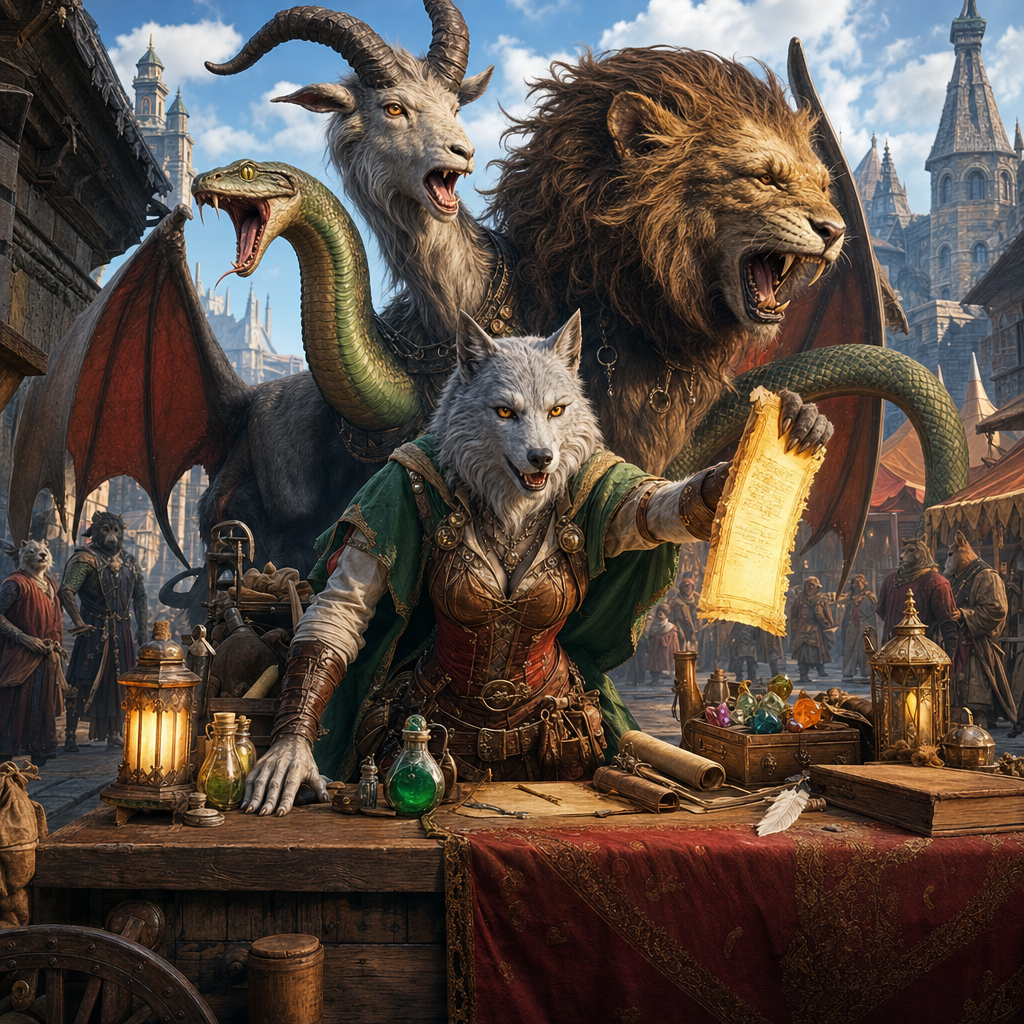
What came back was a Lupine ranger — anthropomorphic, standing upright, with Scout's exact coloring and that same knowing expression. The tool didn't just slap a generic dog-person together. It built a character that looked like Scout, complete with a backstory about tracking criminals through the northern woods and a personality trait: "patient, but will make her disapproval known."
I've used that NPC in three sessions now. Every time she shows up, I know exactly how she'd react. She is Scout — just with thumbs and a longbow.
How to Use an AI NPC Generator Without Losing Your Voice
Some DMs worry that using AI will make their campaign feel generic. I get it. But here's the secret: the AI is a collaborator, not a replacement.
Here's how I use it:
1. Generate the Foundation
I start by creating 3-5 NPCs for a new location. I'll specify roles — tavern keeper, town guard, blacksmith, mysterious traveler — and let the AI build them out. I get names, appearances, personalities, and hooks.
2. Pick What Resonates
Not every detail will fit your campaign. That's fine. I'll take the parts that spark something and adjust the rest. Maybe the merchant's tragic backstory doesn't work, but her sarcastic sense of humor is perfect. Keep what sings, tweak what doesn't.
3. Add Your Own Twists
The AI gives me the skeleton. I add the flesh. Maybe the blacksmith the generator created has a secret — but I decide that secret ties into my campaign's main villain. Maybe the guard is loyal to a fault — so I make him the one NPC who refuses to believe the party, creating tension.
4. Let Them Evolve in Play
The best NPCs surprise you. I had a throwaway shopkeeper — generated in about thirty seconds — who was supposed to sell the party healing potions. But during the conversation, she mentioned offhand that she used to be an adventurer. My character asked why she stopped. I improvised an answer about a cursed artifact.
Three sessions later, that shopkeeper is a recurring character with a whole arc. The AI gave me the seed. Play made it grow.
When to Use an AI NPC Generator (And When to DIY)
Not every NPC needs the full treatment. Here's when I reach for the generator:
- Recurring characters who'll appear across multiple sessions.
- Important quest-givers who need to feel distinct and memorable.
- Characters I'm stuck on. If I've been staring at a blank page for ten minutes, the AI gets me unstuck.
- When I want variety. My brain defaults to the same archetypes. The AI suggests things I wouldn't have thought of.
For truly throwaway NPCs — the random farmer the party asks for directions, the innkeeper who only exists to say "room's two silver" — I still improvise. Save your energy for the characters who matter.
Building NPCs That Stick: What to Look For
Whether you're using an AI NPC generator for D&D or building characters by hand, here's what makes an NPC memorable:
A Clear Want
Every character wants something. The blacksmith wants to retire and open a vineyard. The guard wants to prove herself to her captain. The merchant wants revenge on the thieves' guild. Give them a goal, and suddenly they're not just scenery — they're people.
A Distinct Voice
This doesn't mean every NPC needs an accent (though those help). It means they speak differently from each other. One's curt and businesslike. Another rambles. A third speaks in questions. When you can "hear" them in your head, you're halfway there.
A Vulnerability
Perfect NPCs are boring. Give them flaws, fears, or secrets. The tough-as-nails ranger is terrified of deep water. The cheerful baker is hiding a criminal past. Vulnerability makes them human (or, you know, elf, dwarf, whatever).
A Connection to the World
NPCs shouldn't exist in a vacuum. They have families, histories, allegiances. The town guard is the mayor's nephew. The shopkeeper buys from the same caravan the party just saved. These threads make your world feel interconnected.
My Current Roster (All AI-Generated Starting Points)
Just to give you an idea of range, here are five NPCs I've built with Creature Forge AI over the past few months:
- Merra Brightsteel — A dwarven cartographer with a gambling problem and a map to a sunken city. She's charming, desperate, and lying about half of what she knows.
- Thorn — A Tabaxi monk who runs a dojo in the slums. He's quiet, intense, and absolutely will not help the party unless they prove they're worthy. (He's based on a feral cat that used to hang around the barn. Same energy.)
- Old Garreth — A human fisherman who saw something in the lake twenty years ago and hasn't been the same since. The party thinks he's paranoid. He's not.
- Silvia Greenthorn — A half-elf bard who performs at the tavern and also runs an information network. She knows everything, shares selectively, and always has an angle.
- Copper — A Lupine ranger (based on Scout, my border collie). She guides travelers through the northern woods, charges way too much, and will leave you behind if you slow her down.
Every single one started as an AI generation. Every single one evolved into something I couldn't have imagined on my own.
Why This Matters for Solo Play
If you're running a solo campaign, NPCs are everything. They're your party members, your antagonists, your world-building. You don't have other players to bounce off, so your NPCs have to carry the weight.
An AI NPC generator for D&D doesn't just save time. It gives you company. It populates your world with characters who feel distinct, who react in ways you don't always predict, who make the story richer.
I used to sit down for a session and feel lonely — like I was talking to myself, playing both sides of every conversation. Now I sit down and think, "I wonder what Copper would say about this." And then I find out, because she's a full character with opinions and edges and a backstory that's slowly unfolding.
Try It Yourself
If your NPCs are feeling flat — or if you're staring down a new campaign and dreading the prep — give an AI generator a shot. Start with one character. See what it gives you. Adjust it, play with it, let it surprise you.
Creature Forge AI's NPC generator is a good place to start, especially if you want to try that photo-upload feature. (Seriously, turn your dog into a ranger. It's absurdly fun.)
Your NPCs don't have to be afterthoughts. They can be the reason you're excited to play.