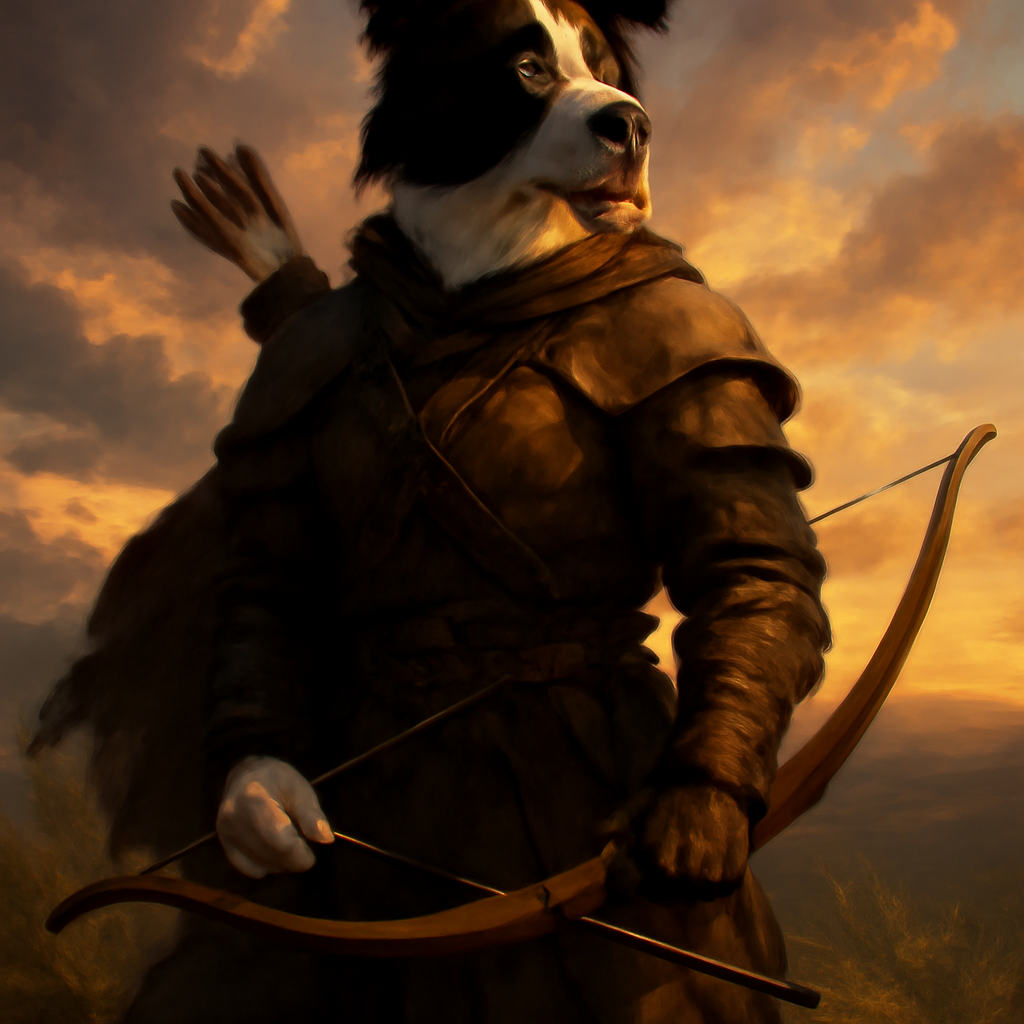
I never thought I'd turn my border collie into a D&D character until I actually did it. Her name's Pepper, and she's got this intense stare that says "I know exactly where the sheep are and you're in my way." One late night during a solo campaign, I thought: what if she was the ranger tracking my party? What if that stare was Survival +7 and a favored enemy of goblins?
Turns out, you can do exactly that now. AI D&D character from picture technology lets you upload a photo—of your pet, your friend, yourself, anyone—and generate a complete fifth edition character that actually resembles them. Not just a generic fantasy portrait with the right hair color. A character that captures their essence, their look, their vibe, complete with stats, traits, and a backstory you can drop straight into your campaign.
How Creating an AI D&D Character From Picture Actually Works
The process is simpler than rolling initiative. You upload a photo, describe what kind of character you want (class, race, personality), and the AI handles the rest. The magic is in what happens next: instead of generating a random elf or dwarf, the system analyzes your photo and builds a character design around those features.
When I uploaded Pepper's photo to Creature Forge AI's character generator, I specified "ranger, level 5, loyal and protective." What came back was a lupine-featured ranger with Pepper's exact markings—the white blaze down her nose, the alert ear set, even that slightly skeptical expression. But standing upright, equipped with a longbow, wearing practical leather armor that looked broken-in and trail-ready.
What You Get Beyond the Picture
This isn't just about the artwork, though that's the hook. A good AI D&D character generator from picture upload gives you:
- Complete stat block: ability scores, proficiencies, saving throws, the works
- Character portrait: that actually reflects the photo you uploaded
- Equipment and inventory: class-appropriate gear that makes sense
- Personality traits and backstory: hooks you can use or modify
- Fifth edition compatibility: ready to add to any campaign or one-shot
Pepper-the-ranger came with a backstory about protecting border settlements from raiding parties. Of course she did. That's exactly what a border collie would do in a fantasy setting.
Why Turn Real People (or Pets) Into D&D Characters
There's something deeply satisfying about seeing someone you know translated into fantasy terms. It's not just novelty—though it is fun—it adds a layer of connection to your game that's hard to get otherwise.
For Solo Players
I play solo more than I probably should admit. Coffee, notebook, dice, and whatever story I'm chasing that week. Populating a campaign with NPCs who are based on real personalities makes the world feel less empty. When "Pepper the Ranger" shows up as a quest-giver, I know how she'd react to a player trying to haggle. I've seen that look. It says "you'll pay my rate or you can track those bandits yourself."
For DMs Building NPC Rosters
Creating an AI D&D character from picture is secretly one of the best DM prep tools out there. You need a memorable contact in the next town? Upload a photo of your uncle who always has a story. Need a rival adventurer? That's your competitive friend from work, now a fighter with a chip on his shoulder. The photo-based generation gives each NPC a distinct visual that your players will remember.
For Players Who Want Custom PCs
Maybe you've always wanted to play as yourself in a fantasy world. Or as your cat—who, let's be honest, already acts like a rogue with delusions of grandeur. A picture-based character generator lets you do that without spending hours on character art commissions or settling for "close enough" on a generator that doesn't know what your cat looks like.
Tips for Getting the Best Results
Not all photos work equally well. After generating a half-dozen characters (Pepper, my old tomcat Edison, and a few experiments with friends who gave permission), I've learned what produces the best results.
Photo Quality Matters
Use a clear, well-lit photo where the face or features are visible. The AI needs enough detail to work with. A blurry shot from across a field won't give you much. A portrait-style photo—even a casual one—works best. For pets, get them looking at the camera if you can. That eye contact translates into character portraits with presence.
Be Specific With Your Instructions
The more direction you give, the better. Don't just say "make a wizard." Say "make a scholarly wizard who looks tired and drinks too much coffee." Or "a nature cleric who's more comfortable with animals than people." The AI can incorporate personality into the design, and it shows.
Embrace the Fantasy Translation
Your photo is a starting point, not a literal blueprint. The AI is translating a real person or animal into a fantasy character. Expect anthropomorphic features if you're uploading a pet—standing upright, able to hold weapons, clothed and equipped like an adventurer. It's not trying to make your dog look human. It's making your dog look like a fantasy race that can function in a D&D party.
The Best Tools for Creating Characters From Photos
I've tried a few different AI tools for this, and they're not all equal. Some generate beautiful art with zero mechanical support—nice for concept art, useless for actual play. Others give you stats but generic portraits that ignore your photo entirely.
Creature Forge AI is the one I keep coming back to because it does both. You upload your photo, you get a character who looks like that photo (translated into fantasy), and you get a complete fifth edition stat block you can use immediately. No stitching together art from one tool and stats from another. It's all there.
The interface is straightforward. Upload, describe, generate. You're not fighting a complicated UI or trying to figure out which settings produce usable output. It just works, which is what I need at the end of a long day when I want to play, not troubleshoot.
Weird and Wonderful Characters I've Created
Edison, my old orange tomcat, became a warlock. I didn't specify warlock—I just uploaded his photo and asked for "a character with a superiority complex and dubious morals." The AI saw the same thing I see every time he knocks something off a table while maintaining eye contact: this creature has definitely made a pact with something for power.
A friend let me use his photo, and I made him a paladin. He laughed, then admitted it was accurate. The portrait caught his stubborn jaw and the way he stands like he's about to deliver a sermon. The backstory included "sworn to protect the innocent, sometimes from themselves," which is him exactly.
I even uploaded a photo of Biscuit, one of our goats, as an experiment. Biscuit is chaos incarnate—escapes every fence, terrorizes the chickens, charms everyone who meets her. She came back as a bard with proficiency in Persuasion and Deception. I've never seen a more accurate character translation in my life.
Using These Characters in Actual Play
The real test is whether these characters work at the table (or in solo play). They do. Pepper-the-ranger has appeared in two different campaigns now as a wilderness guide. She doesn't talk much, trusts her instincts, and has once led a party safely through a blizzard by sheer force of will and a good Survival roll. That's Pepper. That's the dog who herds chickens through mud and somehow keeps them organized.
Edison-the-warlock showed up as an antagonist in a one-shot. His patron was implied but never revealed, his motives were selfish, and he had Charm Person prepared. My players hated him, which felt right.
Why This Matters for Your Game
D&D is collaborative storytelling, but it's also personal. The characters we create, the NPCs we populate our worlds with—they matter because we invest in them. When you create an AI D&D character from picture, you're bringing something from your real life into your fantasy world. It's a bridge between who you are and who you imagine.
It's also just plain fun. There's a joy in seeing your pet translated into adventurer terms, in watching your friend's face light up when they see themselves as a fighter or a cleric. It makes the game feel less abstract, more connected to the people and animals we actually care about.
Getting Started
If you want to try this yourself, you don't need anything fancy. Just a decent photo and a few minutes. Upload it to a tool that supports picture-based character generation—I recommend Creature Forge AI because it's built for exactly this—and see what comes back.
Start with a pet if you have one. They're easier to experiment with, and there's something hilarious about seeing your cat statted out as a rogue or your dog as a paladin. Then, if you want, try yourself or a friend. The possibilities expand fast once you start thinking about your real-world circle as potential party members.
Your next favorite character might be sleeping on your couch right now, or sitting across from you at breakfast. You just need to see them in the right light—preferably torchlight, in a dungeon, with a sword in hand and a story to tell.