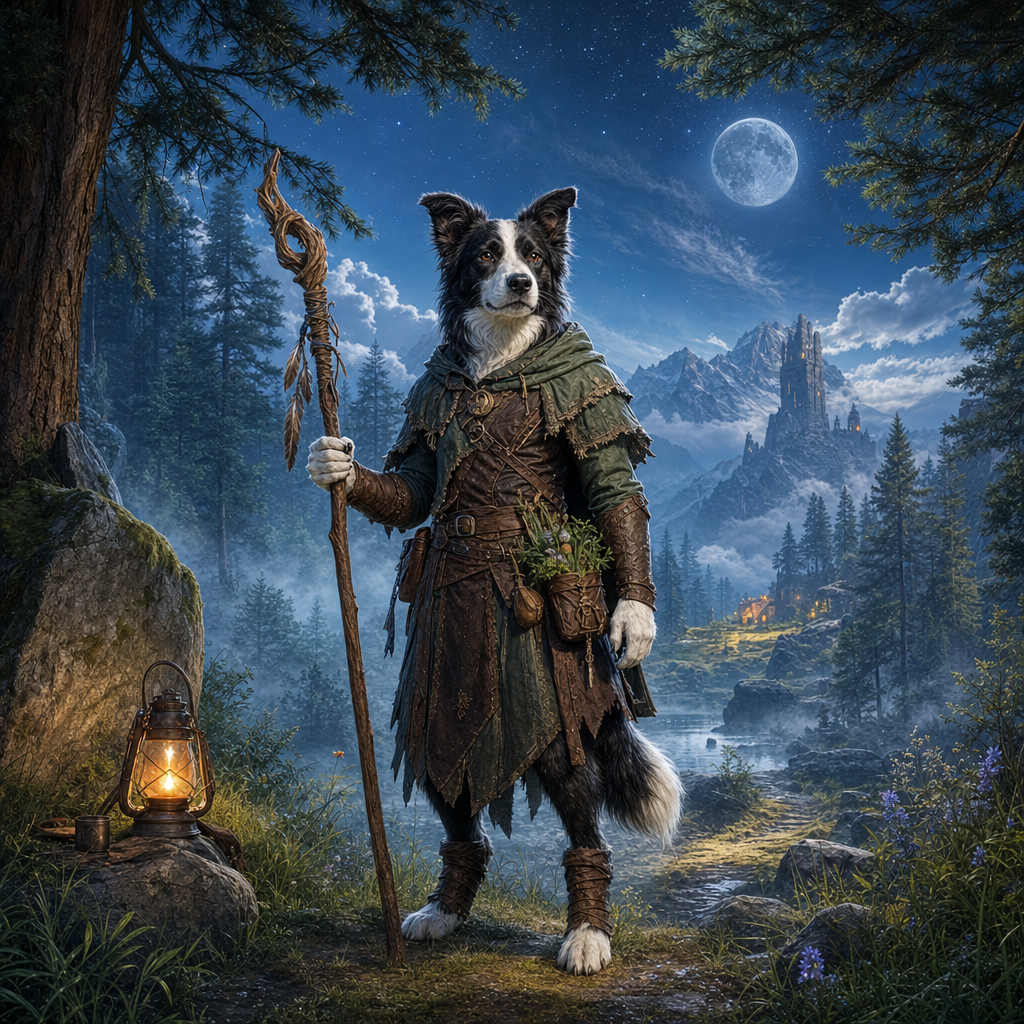
Why 5e Animal Races Hit Different
I've played a lot of characters over the years—mostly in solo campaigns, late at night with a cup of coffee going cold and dice scattered across my kitchen table. And I can tell you this: the moment you commit to playing an animal race in D&D 5e, something shifts. Your character stops being a collection of stats and becomes a person. Or, well, a person-shaped fox. Or bear. Or—in one memorable case—a very opinionated corvid.
Most players know about tabaxi and kenku. Maybe they've encountered an aarakocra or two. But 5e animal races go so much deeper than the handful in the Player's Handbook. Once you start looking at homebrew options, Humblewood adaptations, and creative reflavoring, you unlock a whole menagerie of possibilities. The trick is finding one that actually resonates with how you want to play.
The Core Animal Races (And What They're Actually Good For)
Let's start with what's officially published, because these are your bedrock options—the ones your DM won't blink at when you bring them to session zero.
Tabaxi: More Than Speed Demons
Yes, Feline Agility is absurd. Yes, every optimization guide tells you to pair it with a rogue. But here's what those guides miss: tabaxi are curious. That's their defining trait. I once played a tabaxi wizard whose entire motivation was collecting one spell from every school of magic she encountered, not because it was tactically sound, but because she couldn't stand not knowing how Evocation felt compared to Divination.
Build them as:
- Monks with the mobility to actually use their movement
- Bards who are eternal collectors of stories
- Rangers who hunt knowledge as much as prey
Kenku: The Tragic Mimics
Kenku can't speak in their own voice. They can only repeat sounds they've heard. Most people treat this as a roleplay gimmick. The players who really get kenku treat it as a tragedy they're trying to overcome—or a strength they've learned to weaponize.
I had a kenku cleric in a solo campaign who'd spent decades in a cathedral, and her entire vocabulary was hymns and prayers. When she blessed someone, she sounded like a choir. When she was afraid, she whispered passages about protection. It made every interaction feel layered.
Aarakocra: Flying Changes Everything
Flight at level one breaks a lot of early encounters. Some DMs ban it outright. But if you can work with your DM to make it narratively interesting instead of mechanically broken, aarakocra bring something special to the table: a perspective that's literally different. They see the world from above. They think in thermals and wind currents.
Tortle: The Patient Defenders
Natural armor and a shell retreat that doesn't require armor proficiency. Tortles are for players who want to be unmovable. Druids who become walking ecosystems. Clerics who are literal sanctuaries for their party.
Going Deeper: Homebrew and Adapted Animal Races
This is where it gets fun. Once you move past official content, you can play anything. I've seen lupine pack tacticians, corvid tricksters who aren't bound by kenku restrictions, even a player who adapted mousefolk as a swashbuckler rogue with a rapier the size of a needle.
The Humblewood Races
If your DM allows third-party content, Humblewood offers some of the best-designed animal races in 5e:
- Gallus (roosters/chickens): Watchers of the dawn with bardic support abilities
- Luma (pigeons/doves): Storytellers with keen observation
- Vulpin (foxes): Clever enchanters with natural deception
- Hedge (hedgehogs): Tinkerers and foragers
My favorite was a hedge druid I ran who collected useful plants and fungi in his spines like a walking apothecary. Every spell component was something he'd literally picked up along the road.
Reflavoring Existing Races
You don't always need new mechanics. Sometimes you just need permission to describe things differently. A shifter can be a dozen different animal types depending on how you flavor the transformation. Lizardfolk work perfectly well as crocodilian warriors or monitor-lizard shamans. Leonin are obviously lions, but with a small tweak, they're any big cat—tigers, panthers, jaguars.
The mechanics matter less than the feel. And the feel comes from how you describe your character's movement, their senses, their instincts.
Building Animal Races That Feel Alive
Here's the part that doesn't show up in stat blocks: animal races should act like animals in small, specific ways. Not in a cutesy or distracting way, but in a way that makes them feel real.
Some tricks I've learned:
- Give them a physical tell: Your tabaxi kneads their paws when thinking. Your kenku tilts their head at perfect ninety-degree angles. Your aarakocra ruffles their feathers when annoyed.
- Consider their senses: Canine races notice things by smell first. Avian races are attuned to movement. Feline races have excellent night vision but might be unsettled by sudden loud noises.
- Think about diet: What do they eat? How do they eat it? This comes up more than you'd think at tavern scenes.
- Honor their instincts: A lupine character might feel uncomfortable being the only one awake in camp. A corvid might collect shiny things without even meaning to.
I grew up on a farm with more animals than people. Dogs, cats, goats, chickens, horses, a few cows, one extremely territorial rooster named General Sherman. You learn that every species has its own logic. Goats are stubborn and clever. Horses are nervous and perceptive. Chickens are... well, chickens are chaos agents with feathers. When you play an animal race, you're borrowing that logic and translating it into a character.
The Secret Weapon: Turning Real Animals Into Characters
Here's something I didn't expect to work as well as it does: using actual animals as inspiration for your 5e animal races. Not just "I base this character on wolves in general," but "I base this character on my border collie, Pip."
I used Creature Forge AI's character generator to upload a photo of Pip and build her as a ranger. The tool gave her Pip's alert expression, her black-and-white markings, even something about her posture that felt right. Suddenly I wasn't playing a generic "dog person." I was playing a character with Pip's specific energy—focused, watchful, always aware of where everyone in her pack is.
It sounds gimmicky until you try it. Then it's like a switch flips. You know how this character moves because you've watched the real animal move. You know how they think because you've seen them solve problems. Your goat becomes a stubborn monk who headbutts obstacles. Your cat becomes a rogue who knocks things off tables just to see what happens.
The photo-upload feature works for any pet, any animal you have access to. And the result is a playable character that looks like them, built for D&D 5e with complete stats and abilities.
Class Synergies Worth Exploring
Some race-class combinations feel obvious. Aarakocra ranger. Tabaxi rogue. But the unexpected pairings are often more interesting:
- Tortle barbarian: Rage plus natural armor equals a tank that doesn't need gear to be terrifying
- Kenku wizard: A spellcaster who learned every incantation by rote repetition, like a scholar copying ancient texts
- Vulpin paladin: The trickster fox who swore an oath and actually meant it
- Gallus fighter: A rooster champion who greets every dawn like a challenge
The best builds aren't the optimal ones. They're the ones that make you want to play them. If you're excited about a corvid warlock whose patron speaks to them in clicks and caws, that excitement will carry you further than any damage optimization.
Roleplay Tips for Animal Races
Playing an animal race well means committing to the bit without making it your entire personality. Yes, your character is a fox. But they're also a person with goals, fears, relationships, and a reason for being on this adventure.
Balance species traits with individual personality:
- Your tabaxi might be curious, but what specifically are they curious about?
- Your kenku might mimic voices, but whose voices have they chosen to carry with them?
- Your aarakocra might value freedom, but what does freedom mean to this specific bird person?
The animal traits should flavor the character, not define them entirely. I've seen players lean so hard into "I'm a cat" that they forget to develop an actual personality. And I've seen others use their animal heritage so subtly that it only emerges in moments of stress or comfort—which honestly feels more real.
One Last Thing: Let Them Surprise You
I started this article talking about solo campaigns and coffee and dice. Here's what I've learned from all those late nights: the best characters are the ones who surprise you. You build them with one idea in mind, and then they do something you didn't expect, and suddenly you're writing a whole new chapter of their story.
Animal races do this constantly. You think you're playing a stealthy tabaxi, and then she becomes obsessed with cartography because she needs to map every place her paws have touched. You think you're playing a simple kenku, and then he starts composing original music by layering the sounds he's collected, becoming the world's strangest bard.
Let them be weird. Let them follow instincts you didn't plan for. Let them be animal in ways that deepen their humanity instead of replacing it.
If you're ready to build something that feels this alive, try Creature Forge AI's character tools. Upload a photo of your pet, or just describe the kind of animal person you want to play, and watch the generator bring them to life with full 5e stats and art that actually looks like what you imagined. It's the fastest way I've found to turn "I want to play a raccoon artificer" into a character sheet you're excited to use.
Your table is waiting. The wild things are calling. Time to answer.